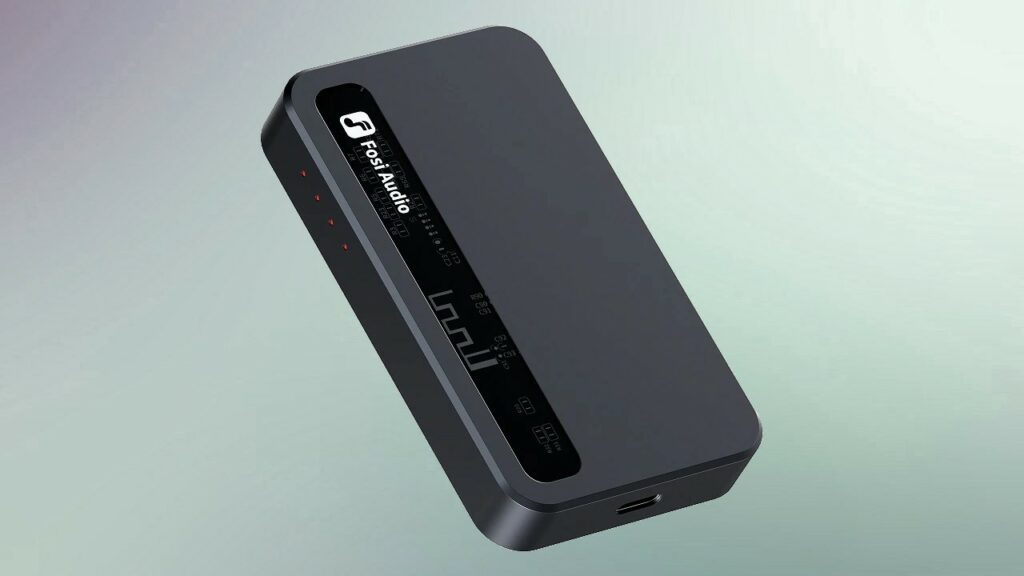
DACs Worth Shortlisting for Serious Digital Listening
A practical Stereoindex guide to DACs for hi-fi, desktop and headphone systems, covering models from SMSL, Luxman, Gold Note, Mytek, Vincent, T+A, Topping, OSD and Luxsin.

A good DAC is not just a format converter.
In many systems it becomes the point where computer audio, disc transports, streamers, TVs, headphones and powered speakers are brought under control, so the right choice depends as much on inputs, outputs and ergonomics as it does on the converter chip inside.
The models below cover several distinct needs: compact USB headphone DACs, full-size hi-fi converters, streamer-DAC hybrids, desktop units with balanced outputs, and even integrated amplifier designs with onboard digital conversion. The recommendations are based only on the supplied product information, so the emphasis is on documented features, supported formats, connection options and system fit rather than unsupported sonic ranking. When comparing them, pay close attention to how you will use the DAC every day. A headphone listener may value output power and balanced headphone sockets, while a two-channel system may need XLR outputs, multiple S/PDIF inputs or preamp functionality. Wireless support, DSD handling, MQA compatibility and physical size can also matter more than a headline chip specification.
1. SMSL RAW-MDA1: High-quality DAC and headphone amplifier
SMSL RAW-MDA1 DAC and headphone amplifier with display, Bluetooth support and balanced XLR outputs.
The SMSL RAW-MDA1 is a feature-rich DAC and headphone amplifier built around two ESS ES9039Q2M DAC chips.
Its source flexibility is a major part of the appeal: USB, optical, coaxial and Bluetooth inputs are joined by RCA, XLR and headphone outputs, allowing it to serve both desktop and hi-fi roles.
The unit also supports MQA and MQA-CD, while the Qualcomm Bluetooth implementation includes LDAC, aptX HD, SBC and AAC. For computer audio, the USB section is based on an XMOS XU-316 interface, with USB 2.0 support up to 768 kHz/32-bit PCM and DSD512 when using a driver, plus a driverless USB 1.1 mode up to 96 kHz/16-bit. The independent headphone amplifier is specified at up to 2.5 W x 2 at 16 ohms, making this one of the more versatile entries here for users who switch between speakers and headphones.
Best for: Desktop and hi-fi users who want one DAC for wired, wireless and headphone listening
- Dual ESS ES9039Q2M DAC chips
- USB, optical, coaxial and Bluetooth inputs
- RCA, XLR and headphone outputs
- MQA, MQA-CD, LDAC and aptX HD support
Verdict: The SMSL RAW-MDA1 stands out as a compact all-rounder with unusually broad input, output and format support for mixed-use systems.

2. Luxman DA-06: DAC equipped with two optical and two coaxial inputs
Luxman DA-06 digital-to-analog converter with aluminum front panel, LED display and multiple S/PDIF inputs.
The Luxman DA-06 is presented as a digital-to-analog converter intended to become the central digital link in a modern audio system.
Its small metal case, shaped aluminum front panel and LED display give it a more traditional hi-fi feel than many desktop DACs, while the non-magnetic metal chassis is designed to protect the electronics from external interference.
Massive supports are also specified to reduce mechanical resonances. The source material highlights the DA-06 in the context of high-resolution PCM and DSD playback, including DSF and DFF file support, making it a suitable candidate for systems built around multiple digital transports and high-resolution libraries. Two optical and two coaxial inputs are especially useful for users with several S/PDIF sources.
Best for: Traditional hi-fi systems with several optical or coaxial digital sources
- Two optical and two coaxial digital inputs
- Metal non-magnetic chassis
- LED display and front-panel controls
- Designed with high-resolution PCM and DSD playback in mind
Verdict: The Luxman DA-06 is the most classic hi-fi DAC choice here, especially for listeners who value multiple S/PDIF inputs and a robust chassis design.

3. Gold Note DS-10: High-quality DAC and streamer combined
Gold Note DS-10 DAC and streamer with display-based adjustment and integrated preamplifier functionality.
The Gold Note DS-10 goes beyond basic digital conversion by combining a DAC, streamer, all-analog line preamp, headphone amplifier and Bluetooth 5.0 support in one component.
According to the supplied material, it is derived from Gold Note’s DS-1000 platform and incorporates capabilities associated with the IS-1000 all-in-one device.
Its most distinctive feature is user-adjustable sound profiling: three profiles can be configured and saved, with access to parameters such as low-pass filtering and high-pass attenuation through the display menu, rotary control or remote. That makes the DS-10 particularly relevant for users who want a network-capable DAC with preamp functionality and adjustable digital behavior rather than a fixed-output converter only.
Best for: Listeners who want a streamer-DAC with preamp functions and user-adjustable profiles
- DAC, streamer, line preamp and headphone amplifier in one unit
- Bluetooth 5.0 support
- Three user-adjustable sound profiles
- Menu, rotary control and remote operation
Verdict: The Gold Note DS-10 is the most system-integrated choice in this selection, combining streaming, conversion, preamp duties and headphone listening in a single component.

4. Mytek Manhattan DAC II: Technically advanced USB DAC
Mytek Manhattan DAC II full-size USB DAC with front headphone outputs and remote control support.
The Mytek Manhattan DAC II is described as the manufacturer’s most expensive and technically advanced USB DAC, built around the ESS ES9038 Pro DAC chip.
The design uses a Mytek linear power supply and the company’s Femto Clock generator to support the converter stage.
It is also a serious headphone component: the front panel carries two headphone outputs, and the material notes support for two pairs of regular headphones or demanding high-end models through a balanced connection using an adapter to 4-pin XLR. The amplifier is specified at 6 W with 0-ohm impedance. The Manhattan DAC II is a full-size component, with a case made in California, manufacturing in Poland, three color options listed, and the option to place it on rubber feet or supplied spikes. An IR remote control is included.
Best for: High-end systems that need a full-size USB DAC with strong headphone facilities
- ESS ES9038 Pro DAC chip
- Mytek linear power supply and Femto Clock generator
- Two front-panel headphone outputs
- Included IR remote control
Verdict: The Mytek Manhattan DAC II is a technically ambitious full-size DAC for users who want serious USB conversion and front-panel headphone flexibility in one chassis.

5. Vincent DAC-1MK: Upgraded DAC with improved sound quality and functionality
Vincent DAC-1 MK digital-to-analog converter with ES9038 conversion and USB, optical and coaxial input support.
The Vincent DAC-1 MK is an upgraded version of Vincent’s junior DAC, adding DSD reception through USB and support for files up to 32-bit/384 kHz through that input.
Optical and coaxial inputs support digital signals up to 24-bit/192 kHz.
The conversion stage uses an ES9038 chip, followed by balanced circuit processing, and the internal parts list includes components from WIMA and Nichicon. The power supply arrangement is also a key part of the design: a transformer with dual windings feeds the analog and digital sections separately, a layout intended to reduce parasitic interference. For users who want a straightforward hi-fi DAC rather than a streamer or headphone-first device, the DAC-1 MK keeps the focus on wired digital conversion and internal power separation.
Best for: Hi-fi systems needing a focused wired DAC with USB, optical and coaxial inputs
- USB input supports DSD reception
- USB playback up to 32-bit/384 kHz
- Optical and coaxial support up to 24-bit/192 kHz
- Separate transformer windings for analog and digital sections
Verdict: The Vincent DAC-1 MK is a practical wired DAC with upgraded format support and a power-supply design that separates analog and digital sections.

6. T+A DAC 8 DSD: Compact and powerful DAC
T+A DAC 8 DSD compact aluminum DAC with proprietary DSD conversion and analog preamplifier section.
The T+A DAC 8 DSD is a compact DAC with a square footprint of 270 mm per side and a height of 95 mm, yet its internal design is presented as highly specialized.
It supports signals up to DSD512 and uses a proprietary discrete True 1-bit DSD DAC for DSD conversion.
PCM signals are handled by a separate processing approach using four PCM DACs per channel. The design also includes a precision clock generator and separate power circuits for digital and analog sections. Its preamplifier section is fully analog, and the headphone amplifier is described as suitable for controlling high-impedance headphones. The aluminum case construction, with thick top and bottom plates and die-cast side and front profiles, gives it a compact but substantial physical design.
Best for: Compact high-resolution systems that prioritize DSD handling and analog preamp capability
- Supports signals up to DSD512
- Discrete True 1-bit DSD DAC design
- Four PCM DACs per channel for PCM processing
- Analog preamplifier section and headphone amplifier
Verdict: The T+A DAC 8 DSD is a compact but technically distinctive DAC for listeners who need serious DSD support, PCM processing and headphone use without a full-width chassis.

7. Topping E50 II: A Smarter, More Flexible DAC for Desktop and Hi-Fi
Topping E50 II compact desktop DAC with high-resolution USB support and LDAC-compatible Bluetooth.
The Topping E50 II is designed for both desktop use and integration into traditional hi-fi systems.
It combines an AKM AK4497S DAC chip with an XMOS XU316 USB controller and supports PCM up to 32-bit/768 kHz and DSD up to DSD512.
Wireless playback is covered by integrated Bluetooth with LDAC compatibility. Internally, Topping uses a proprietary FPGA platform together with a PLL-based clock generation system, described by the manufacturer as TopSync, with jitter-reduction technology branded JitterNull. The supplied material emphasizes broader connectivity and enhanced user control, making the E50 II a compact option for users who need high-resolution USB support, Bluetooth convenience and desktop-friendly flexibility.
Best for: Desktop and compact hi-fi setups needing high-resolution USB plus Bluetooth
- AKM AK4497S DAC chip
- XMOS XU316 USB controller
- PCM up to 32-bit/768 kHz and DSD up to DSD512
- Bluetooth with LDAC compatibility
Verdict: The Topping E50 II is a flexible compact DAC with strong format support, LDAC Bluetooth and manufacturer-developed clock-control features.

8. SMSL D10: High performance portable USB DAC
SMSL D10 portable USB DAC and headphone amplifier with transparent window, aluminum body and side volume control.
The SMSL D10 is a portable USB DAC and headphone amplifier aimed at users who want high-resolution listening from computers, phones and similar USB sources.
It uses two Cirrus Logic CS43131 DAC chips and supports DSD256 plus PCM up to 32-bit/384 kHz.
Headphone connectivity includes both a 3.5 mm single-ended output and a 4.4 mm balanced output, giving it broader headphone compatibility than many pocketable DACs. Output power is specified at up to 500 mW at 16 ohms, and the listed figures include a 121 dB signal-to-noise ratio and 121 dB dynamic range. The transparent window, aluminum body and side volume button are practical differentiators for portable and desktop use.
Best for: Portable USB headphone listening from computers and phones
- Dual Cirrus Logic CS43131 DAC chips
- DSD256 and PCM up to 32-bit/384 kHz
- 3.5 mm single-ended and 4.4 mm balanced headphone outputs
- Up to 500 mW output at 16 ohms
Verdict: The SMSL D10 is the most portable headphone-focused option here, pairing USB hi-res support with both single-ended and balanced headphone outputs.

9. OSD DAC-X200: Audiophile Graded Hi Definition DAC
OSD DAC-X200 slim integrated amplifier with onboard ESS DAC, USB input and speaker outputs.
The OSD DAC-X200 is not a standalone DAC in the usual sense; it is an integrated Class AB amplifier with a built-in DAC.
That makes it relevant for users who want digital conversion and speaker amplification in one slim component.
The DAC section uses an ESS ES9018K2M SABRE32 chip and accepts high-resolution audio via USB Type A with Class 2 audio support, including PCM up to 32-bit/384 kHz and DSD up to 11.2 MHz. Connectivity also includes an optical digital input and two RCA analog inputs. On the amplifier side, the supplied material states 100 W per channel RMS into 8 ohms, 200 W into 4 ohms and a 320 W mono mode. Two sets of speaker outputs are also noted, supporting use in stereo and distributed audio systems around the home.
Best for: Systems that need DAC functionality combined with speaker amplification
- Integrated Class AB amplifier with built-in DAC
- ESS ES9018K2M SABRE32 DAC
- USB Class 2 audio with PCM up to 32-bit/384 kHz
- Optical digital input and two RCA analog inputs
Verdict: The OSD DAC-X200 is best viewed as an amplifier with serious digital inputs, suited to users who want fewer boxes rather than a standalone DAC alone.
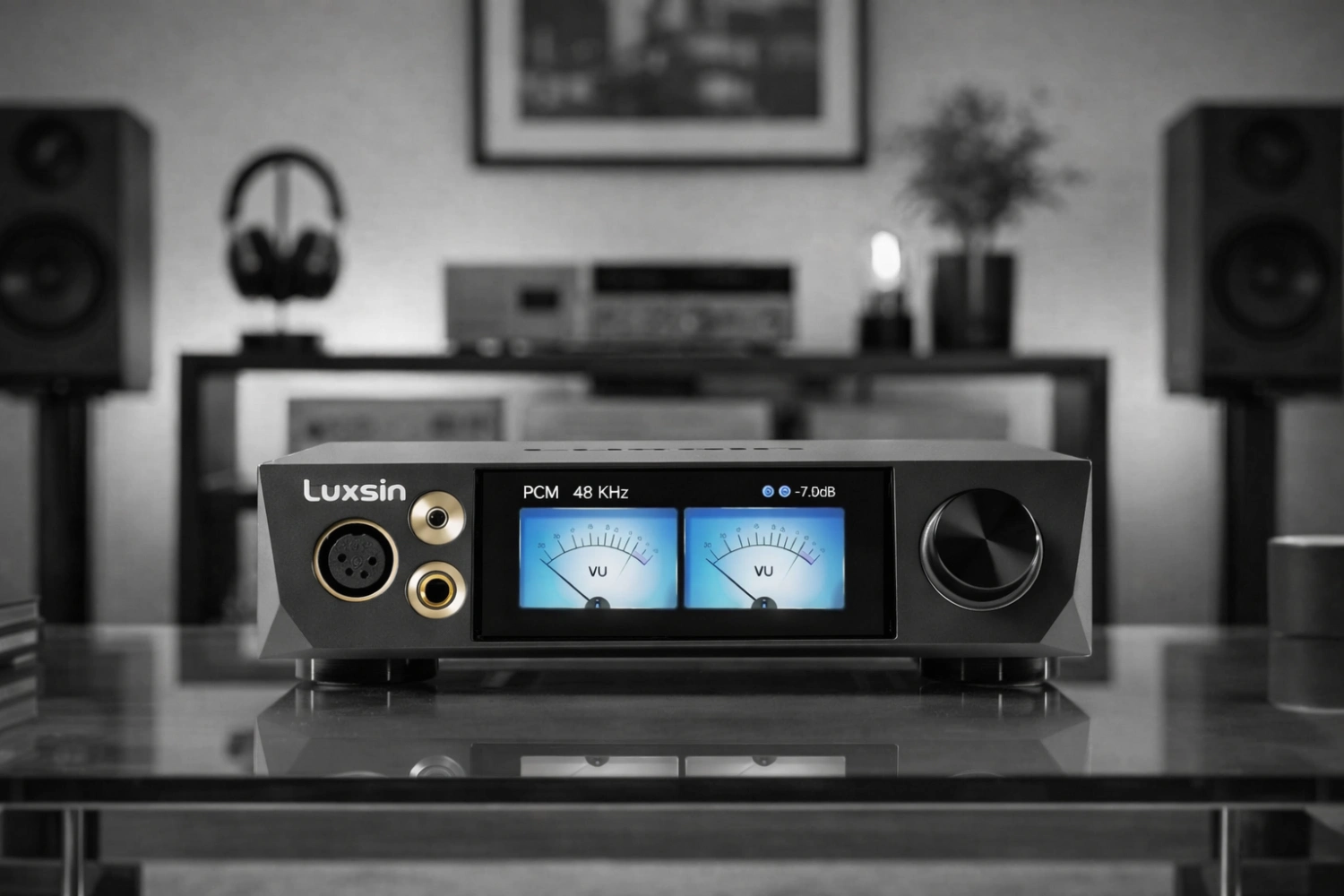
10. Luxsin X8
Luxsin X8 desktop DAC and headphone amplifier with eight-DAC architecture and separated internal power design.
The Luxsin X8 is a desktop DAC/headphone amplifier built around an unusually elaborate eight-DAC architecture.
It uses eight Cirrus Logic CS43198 DAC chips in a true dual-mono parallel configuration, with four DACs per channel contributing to a summed analog output.
The supplied material also notes physically and electrically separated left and right channels, independent power delivery and signal paths, dedicated buffering, clock distribution and individual shielding for each DAC. Headphone output is specified at nearly 5 W per channel, and the unit uses a fully separated linear power supply. Its emphasis is on combining a high-channel-count DAC layout with powerful headphone amplification and software-based personalization features, making it distinct from the simpler USB DACs in this list.
Best for: Desktop headphone systems needing high output power and advanced personalization features
- Eight Cirrus Logic CS43198 DAC chips
- True dual-mono parallel architecture
- Nearly 5 W per channel headphone output
- Fully separated linear power supply
Verdict: The Luxsin X8 is the most elaborate desktop DAC/amp here, defined by its eight-DAC layout, separated signal paths and powerful headphone stage.
Quick comparison
These DACs are not direct substitutes for one another.
Some are pure converters, some include headphone amplifiers, one adds streaming and preamp functionality, and another is an integrated speaker amplifier with a DAC onboard.
The most useful comparison is therefore by system role rather than by a single specification.
| Product | Best for | Verdict |
|---|---|---|
| SMSL RAW-MDA1 | Mixed desktop and hi-fi use with Bluetooth, MQA and headphones | A broad-featured DAC/headphone amp with USB, S/PDIF, Bluetooth, RCA, XLR and headphone connectivity. |
| Luxman DA-06 | Traditional hi-fi systems with multiple optical and coaxial sources | A classic hi-fi DAC design with a robust chassis and strong S/PDIF input provision. |
| Gold Note DS-10 | Systems needing a DAC, streamer, preamp and headphone amp in one box | A highly integrated network-capable DAC with adjustable sound profiles and preamp functionality. |
| Mytek Manhattan DAC II | Full-size high-end USB DAC systems with serious headphone requirements | A technically advanced DAC using an ESS ES9038 Pro chip, Mytek clocking and a powerful headphone section. |
| Vincent DAC-1 MK | Wired hi-fi systems using USB, optical and coaxial sources | A focused DAC with ES9038 conversion, DSD over USB and separated analog and digital power feeds. |
| T+A DAC 8 DSD | Compact systems prioritizing DSD support, PCM processing and headphone use | A compact DAC with proprietary DSD conversion, separate PCM processing and an analog preamp section. |
| Topping E50 II | Desktop and compact hi-fi setups needing hi-res USB and LDAC Bluetooth | A flexible compact DAC with AKM conversion, XMOS USB and manufacturer-developed clock-control features. |
| SMSL D10 | Portable USB headphone listening | A small USB DAC/amp with dual CS43131 chips and both 3.5 mm and 4.4 mm headphone outputs. |
| OSD DAC-X200 | Users who want DAC conversion and speaker amplification in one component | An integrated Class AB amplifier with an ESS DAC, USB audio support and multiple speaker-output options. |
| Luxsin X8 | Desktop headphone systems needing high power and advanced personalization | A powerful DAC/amp built around eight CS43198 chips, dual-mono architecture and a separated linear power supply. |
Frequently asked questions
Should I choose a standalone DAC or a DAC with a headphone amplifier?
Choose a standalone DAC if it will feed an integrated amplifier, preamp or active speakers and you do not need headphone listening from the same box.
Choose a DAC/headphone amplifier if headphones are central to your system; models such as the SMSL RAW-MDA1, SMSL D10, T+A DAC 8 DSD, Mytek Manhattan DAC II and Luxsin X8 all include headphone facilities.
Do I need balanced outputs such as XLR or 4.4 mm?
Balanced outputs are useful only if the rest of your system can use them.
The SMSL RAW-MDA1 provides XLR outputs for hi-fi systems, while the SMSL D10 offers a 4.4 mm balanced headphone output.
If your amplifier or headphones are single-ended only, balanced connectivity should not be the deciding factor.
How important are high-resolution PCM, DSD and MQA support?
Format support matters when it matches your music library and source hardware.
The Topping E50 II and SMSL RAW-MDA1 support very high PCM and DSD rates over USB, the T+A DAC 8 DSD emphasizes DSD handling, and the SMSL RAW-MDA1 adds MQA and MQA-CD support.
If you mainly use standard-resolution streaming or optical TV audio, inputs and usability may matter more than maximum sample-rate figures.
Which DAC type is best for a minimalist system?
A minimalist system benefits from fewer boxes and the right combination of functions.
The Gold Note DS-10 combines DAC, streamer, line preamp, headphone amp and Bluetooth, while the OSD DAC-X200 combines a DAC with speaker amplification.
For a compact computer-and-headphone setup, the SMSL D10 is the simplest portable option among the products listed.
How to Choose the Right DAC from This Shortlist
Start with the system role.
If you need a central digital hub for a hi-fi rack, the Luxman DA-06, Vincent DAC-1 MK, SMSL RAW-MDA1 and Mytek Manhattan DAC II make the most sense, with the Luxman leaning toward multiple S/PDIF sources, the Vincent toward straightforward wired conversion, the SMSL toward wide input and output flexibility, and the Mytek toward a full-size high-end USB DAC with serious headphone capability.
For desktop headphone listening, narrow the field by size and output needs. The SMSL D10 is the portable USB choice, with 3.5 mm and 4.4 mm headphone outputs in a small body. The Topping E50 II is better suited to a compact desktop or hi-fi setup where high-resolution USB, LDAC Bluetooth and user control are priorities. The Luxsin X8 is the heavier-duty desktop DAC/amp option, with an eight-DAC architecture and nearly 5 W per channel of specified headphone output. If you want one component to replace several, the Gold Note DS-10 and OSD DAC-X200 are the most functionally distinct. The Gold Note adds streaming, preamp operation, headphone amplification, Bluetooth and adjustable profiles. The OSD takes a different route by combining an ESS-based DAC with a Class AB speaker amplifier, making it a space-saving option for systems that need power amplification as well as digital inputs. Avoid choosing by DAC chip alone. The supplied material shows that power-supply layout, clocking, inputs, output stages, headphone capability, control options and physical format differ widely across these products. The right DAC is the one whose connections and functions match your actual sources, amplifier, headphones and listening habits.