

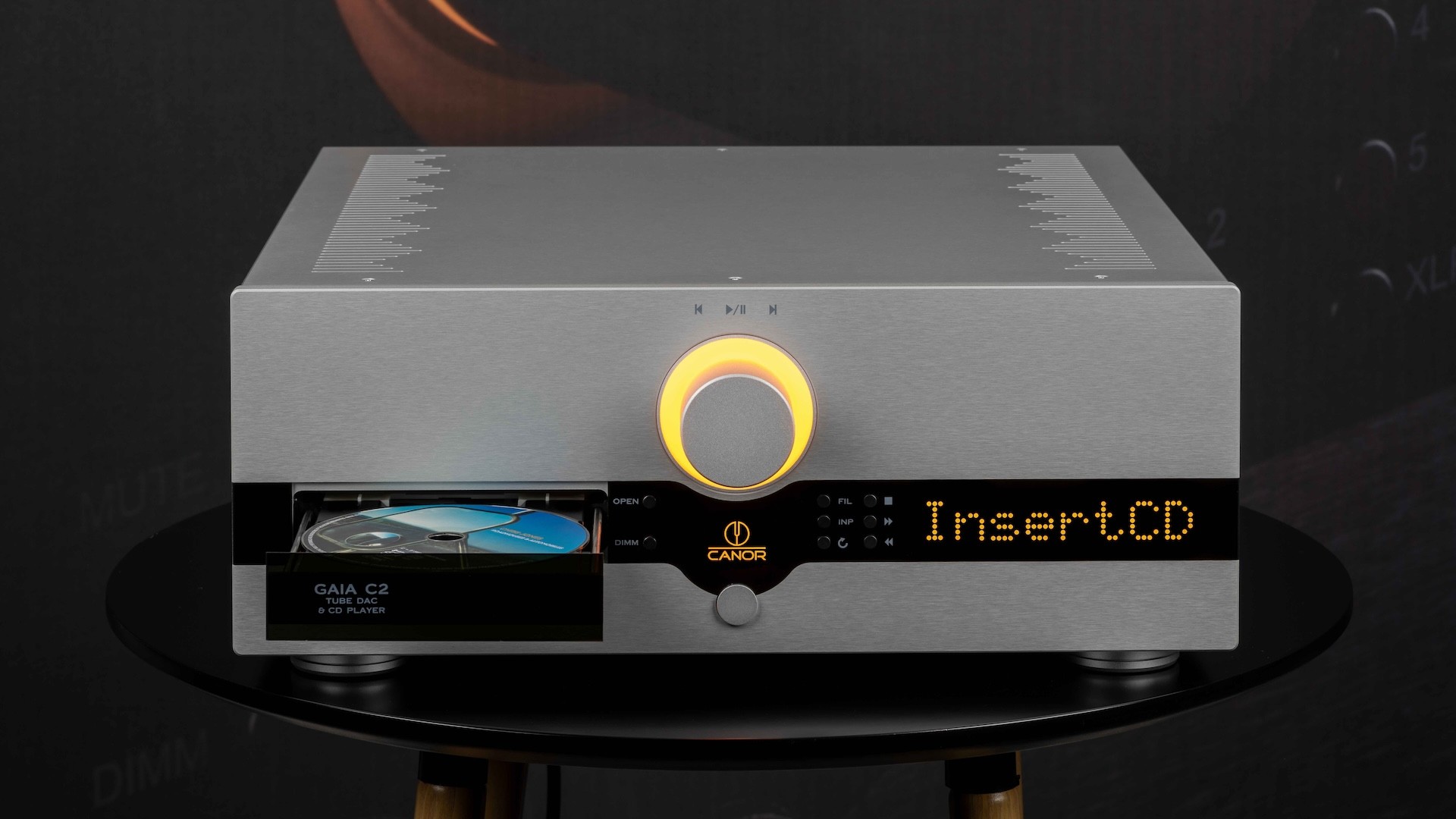
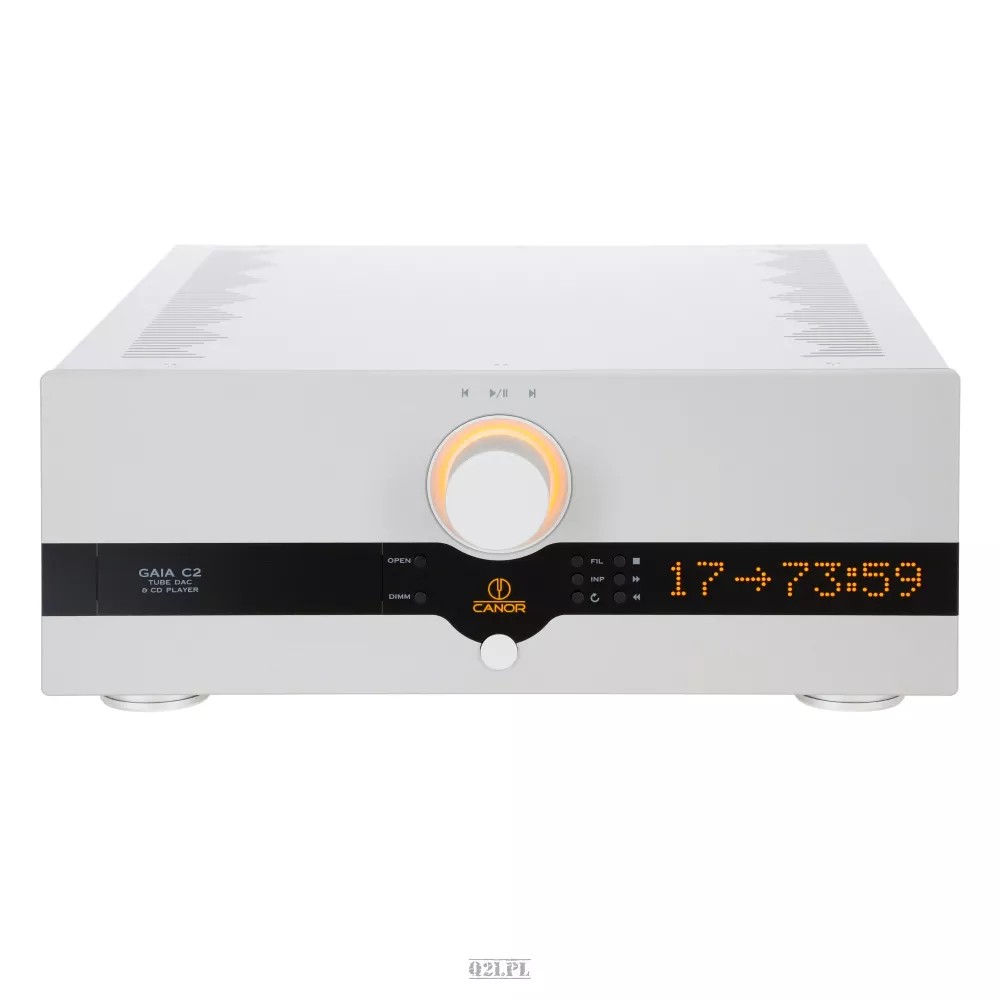
The Canor Gaia C2 is a reminder that the CD format still has a place in serious hi-fi systems—especially when it’s paired with a high-quality DAC and a proper tube output stage. Built in Prešov, Slovakia, the Gaia C2 combines a CD player and a digital-to-analog converter in a single, solid aluminum chassis, designed for listeners who value physical media but don’t want to give up modern digital flexibility.
Rather than positioning the Gaia C2 as a direct replacement for Canor’s earlier CD players, the company describes it as a fresh design inspired by past models, but developed to go further—especially when it comes to sound quality and overall refinement.
Dual-Mono Digital Design
At its core, the Gaia C2 uses a dual-mono architecture, meaning the left and right channels are handled independently to improve stereo separation and reduce crosstalk. Digital conversion is handled by two Texas Instruments PCM1792A DAC chips, supporting PCM playback up to 24-bit / 192 kHz.
This approach isn’t about chasing extreme specs—it’s about stability, channel balance, and consistency across different sources, whether you’re spinning a CD or feeding the DAC from an external streamer.
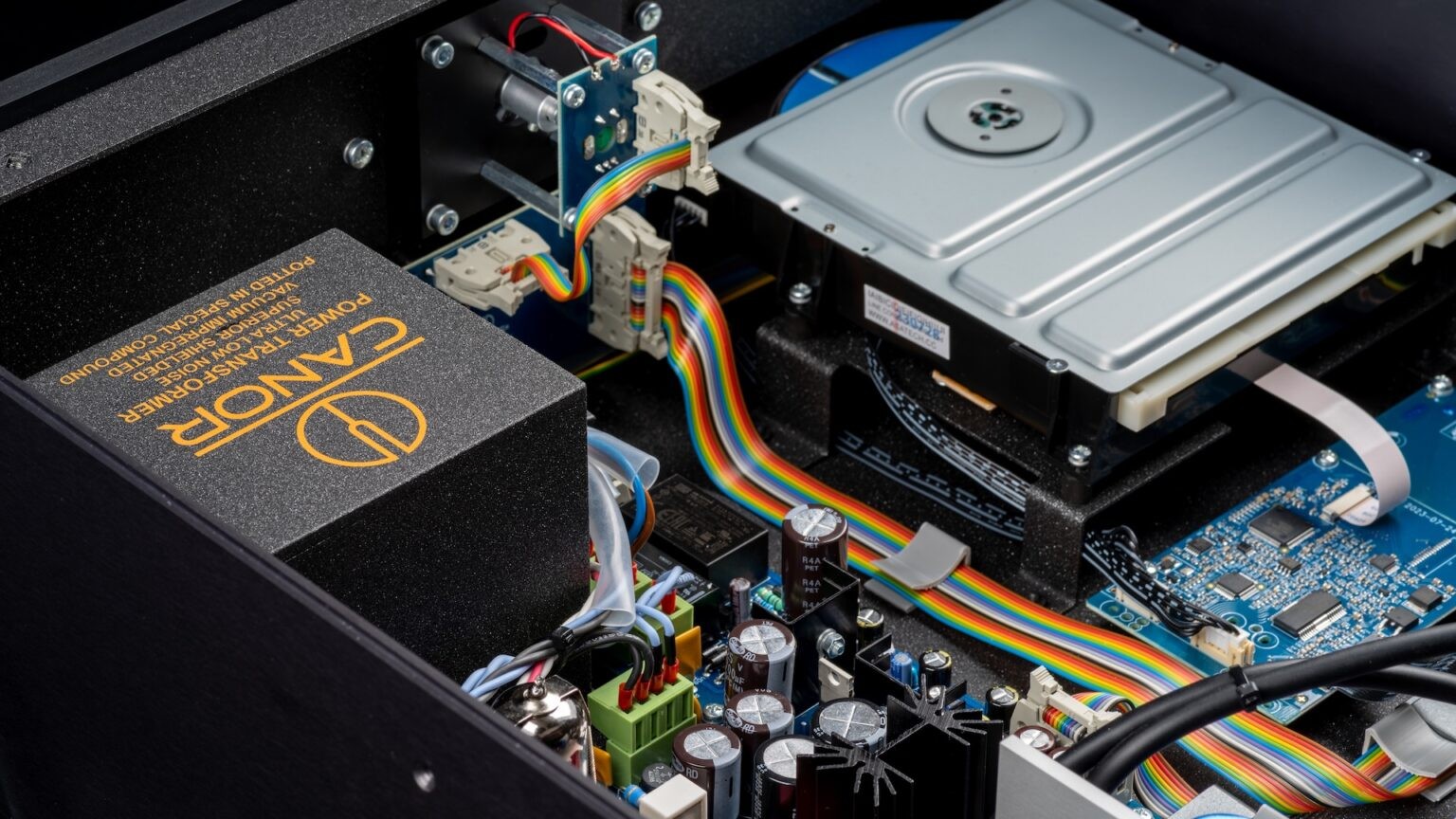
Where the Gaia C2 really sets itself apart is its tube-based analog output stage. Canor uses a carefully selected tube complement: two 12AX7 tubes and two 6922 / E88CC tubes, supported by a 6CA4EH rectifier and high-quality Mundorf capacitors.
The output stage is built around supersymmetrical, passive filtering, and users can choose between two digital filter modes—Natural and Dynamic—depending on taste and system matching. In addition to PCM, the Gaia C2 also supports DSD playback at DSD64, DSD128, and DSD256.
The overall tuning aims for clarity and control, but with the natural flow and tonal richness that tube lovers expect.
Connectivity for Modern Systems
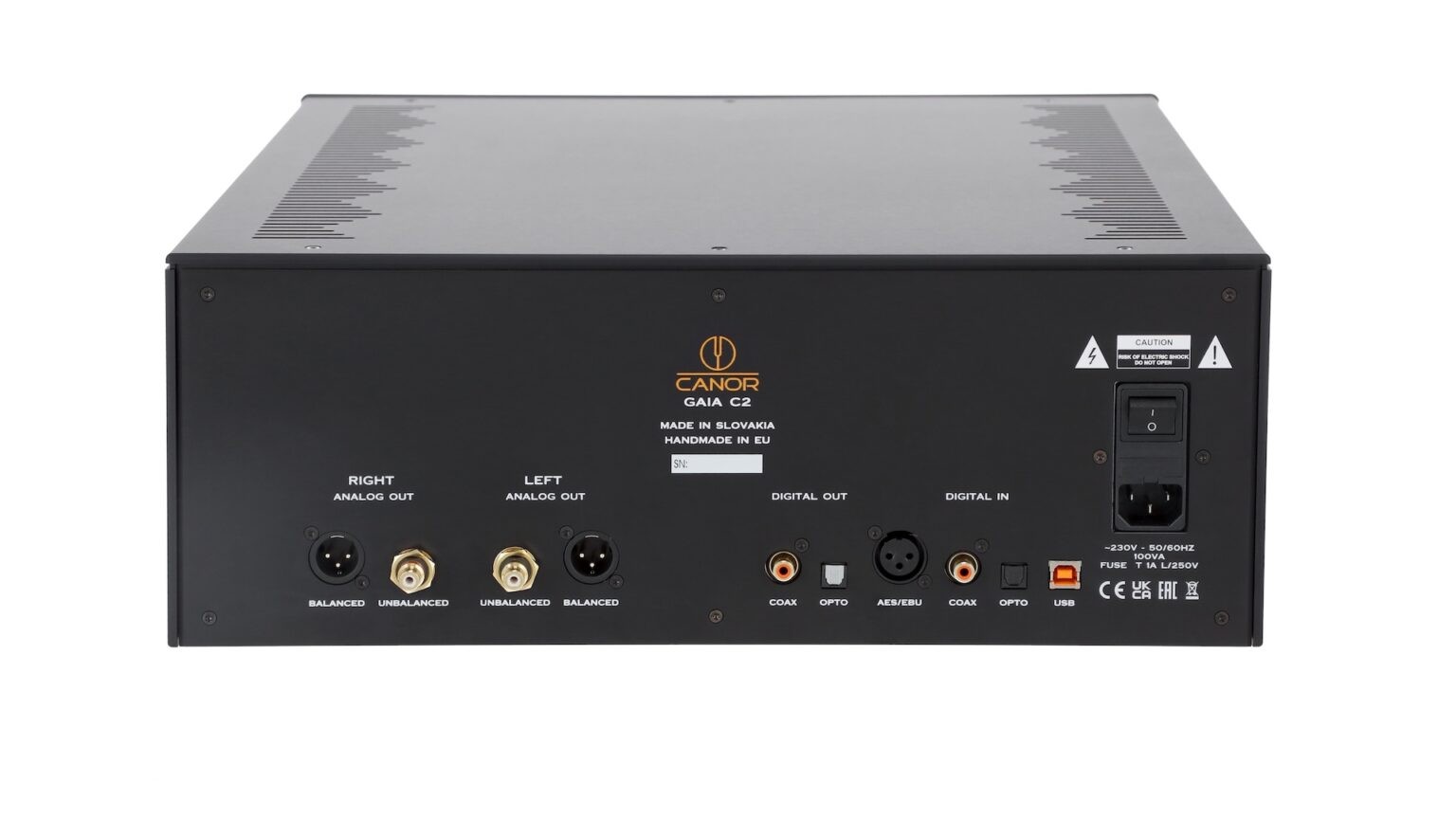
Despite its classic CD focus, the Gaia C2 is well equipped for modern setups. Digital inputs include USB-B, AES/EBU, coaxial, and optical (TOSLink). The internal CD transport feeds the DAC directly, but the DAC section can also be used independently.
On the output side, the Gaia C2 offers both balanced XLR and unbalanced RCA analog outputs, as well as coaxial and optical digital outputs. This makes it easy to integrate into a wide range of systems, whether tube-based or fully solid-state.
Build, Specs, and Price
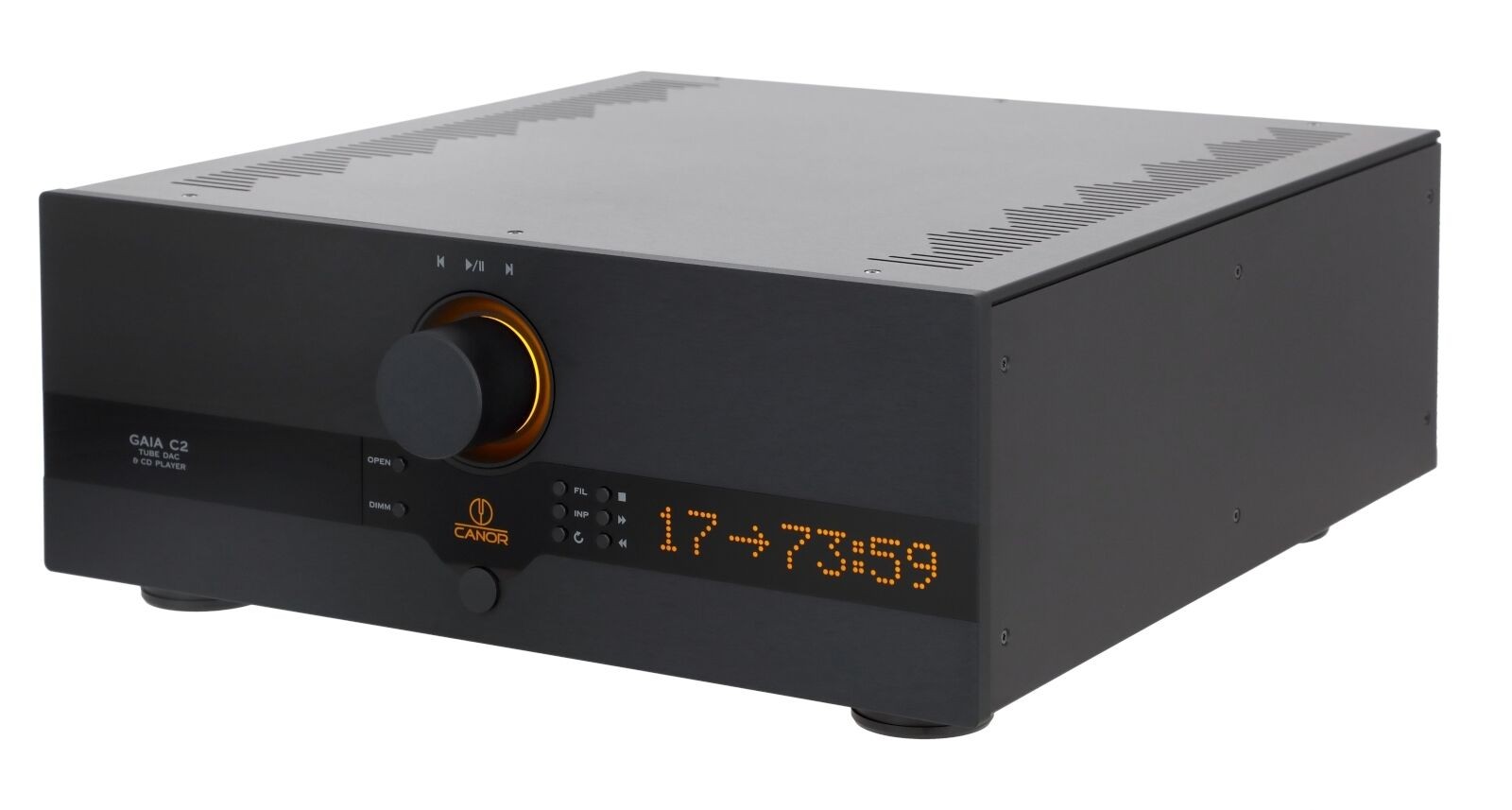
The Gaia C2 measures 435 × 176 × 484 mm (W × H × D) and weighs in at 18 kg (about 40 lbs), underlining that this is very much a full-size, no-compromise component.
Key specifications include:
-
Frequency response: 20 Hz – 20 kHz (-1.0 dB)
-
Total harmonic distortion: < 0.0007% at 1 kHz / 0 dBFS (XLR)
-
Channel separation: better than -118 dB at 10 kHz (XLR)
-
Output level: 2 Vrms (RCA), 4 Vrms (XLR)
The recommended retail price for the Canor Gaia C2 is approximately $7,300 USD.
The Canor Gaia C2 isn’t trying to reinvent digital audio. Instead, it refines a proven idea: combine a high-quality CD transport, a serious DAC, and a thoughtfully designed tube output stage in one solid, well-built component.
For listeners who still enjoy CDs but want modern digital support—and who appreciate the character and musicality tubes can bring—the Gaia C2 is a compelling, carefully executed solution that feels both traditional and current at the same time.



Sound Off
0Join the discussion if you have something to add.