


In a hi-fi world obsessed with ever faster chips and smarter algorithms, Gustard is still betting on something refreshingly unfashionable: resistors. Lots of them. And with the R26 II, the company is saying—pretty confidently—that R2R isn’t just alive, it’s thriving.
At first glance, the R26 II looks familiar. Clean, understated, solidly built. But under the lid, this DAC is very much about control, precision, and doing things the hard way. Instead of leaning on off-the-shelf delta-sigma chips, Gustard sticks with its own fully discrete 26-bit R2R ladder, handling PCM and DSD as they are—no conversion tricks, no shortcuts.
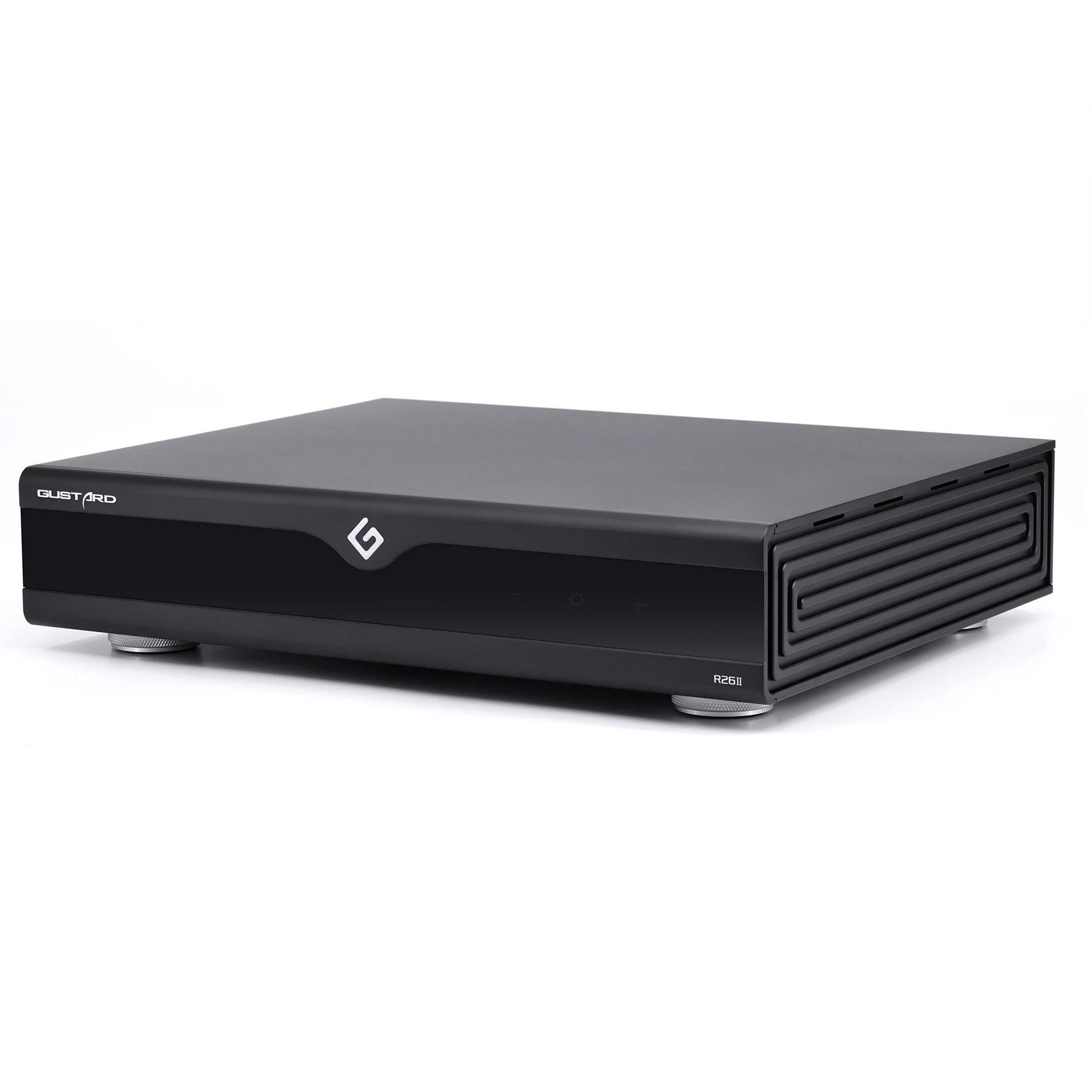
This means native 1-bit DSD is processed directly, all the way up to a frankly ridiculous DSD2048 via I2S, while PCM support stretches to 32-bit / 768 kHz. Numbers aside, the real promise here is tonal density, timing, and that unmistakable R2R sense of flow that fans chase.
Streaming, Done Properly
The original R26 already blurred the line between DAC and streamer, but the R26 II takes that idea much further. Gustard worked closely with CelAudio to build a dedicated network bridge running an optimized Linux platform, designed specifically to keep audio traffic clean and prioritized.
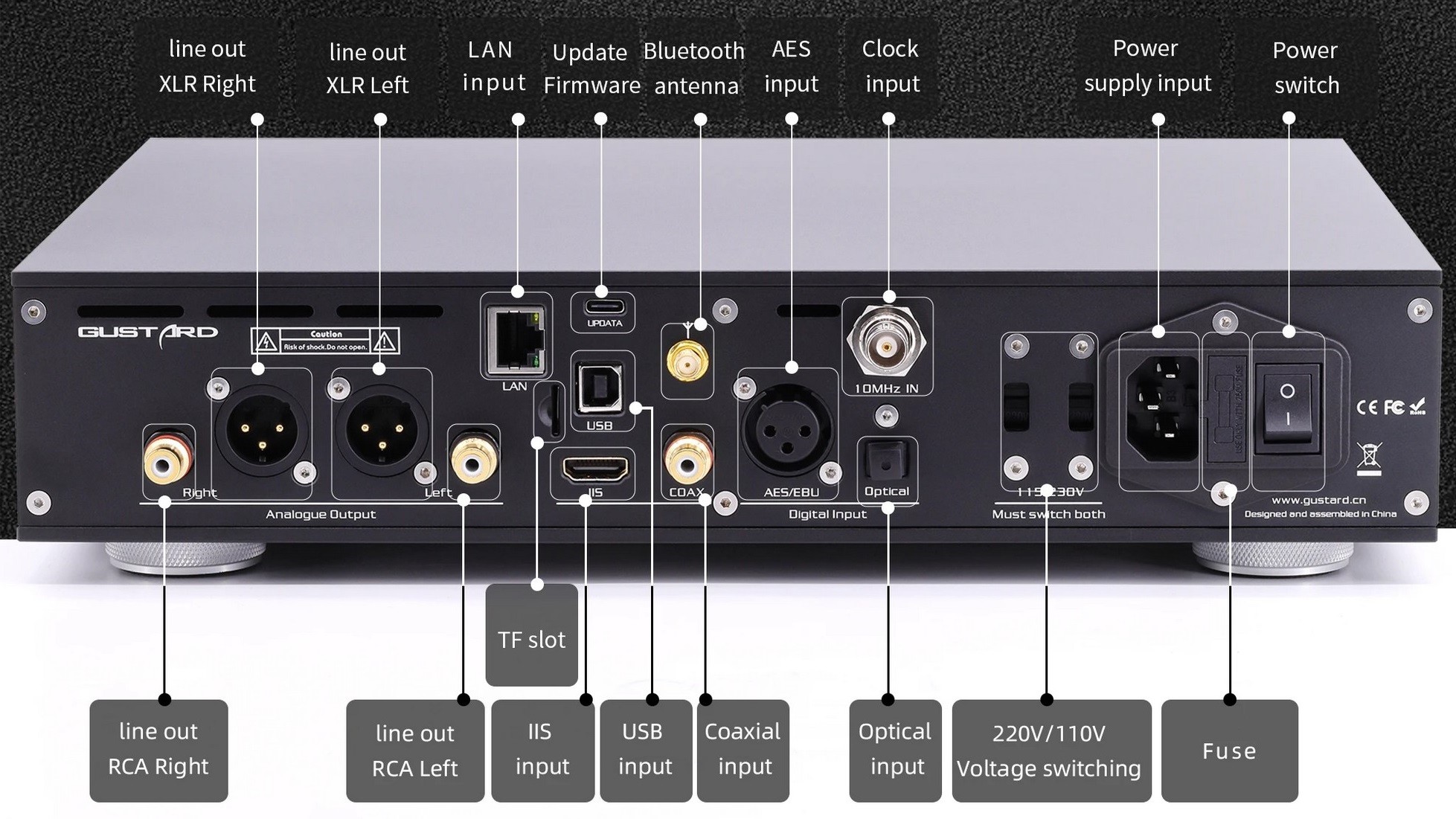
This isn’t a “feature checkbox” streamer. Roon Bridge, AirPlay, UPnP, Spotify NAA, HoloPlayer NAA—it’s all here, and managed through a clean web interface where unnecessary background services can be shut down entirely. Less noise, less interference, more music. Simple idea. Rarely executed this cleanly.
Clocking Without the Drama
Timing matters in digital audio, and Gustard clearly knows it. The R26 II uses its own GCLK-02 clock module with PLL technology, boasting locking accuracy down to 1 Hz. If you’re the type who already owns a high-end master clock, there’s a 10 MHz BNC input waiting for it. If not, the internal clocking is serious enough that you won’t feel shortchanged.
Discrete All the Way Out
Where many DACs hand things off to op-amps and call it a day, the R26 II keeps things fully discrete right through the analog stage. The output runs in Class A, paired with a dedicated low-pass filter and zero op-amps in sight. The result—on paper at least—is low noise, high linearity, and a signal path that stays consistent from digital input to analog output.
Both RCA and XLR outputs are provided at fixed levels, making the R26 II a natural partner for high-quality preamps, integrated amps, or active speaker setups.
Built Like It Means It
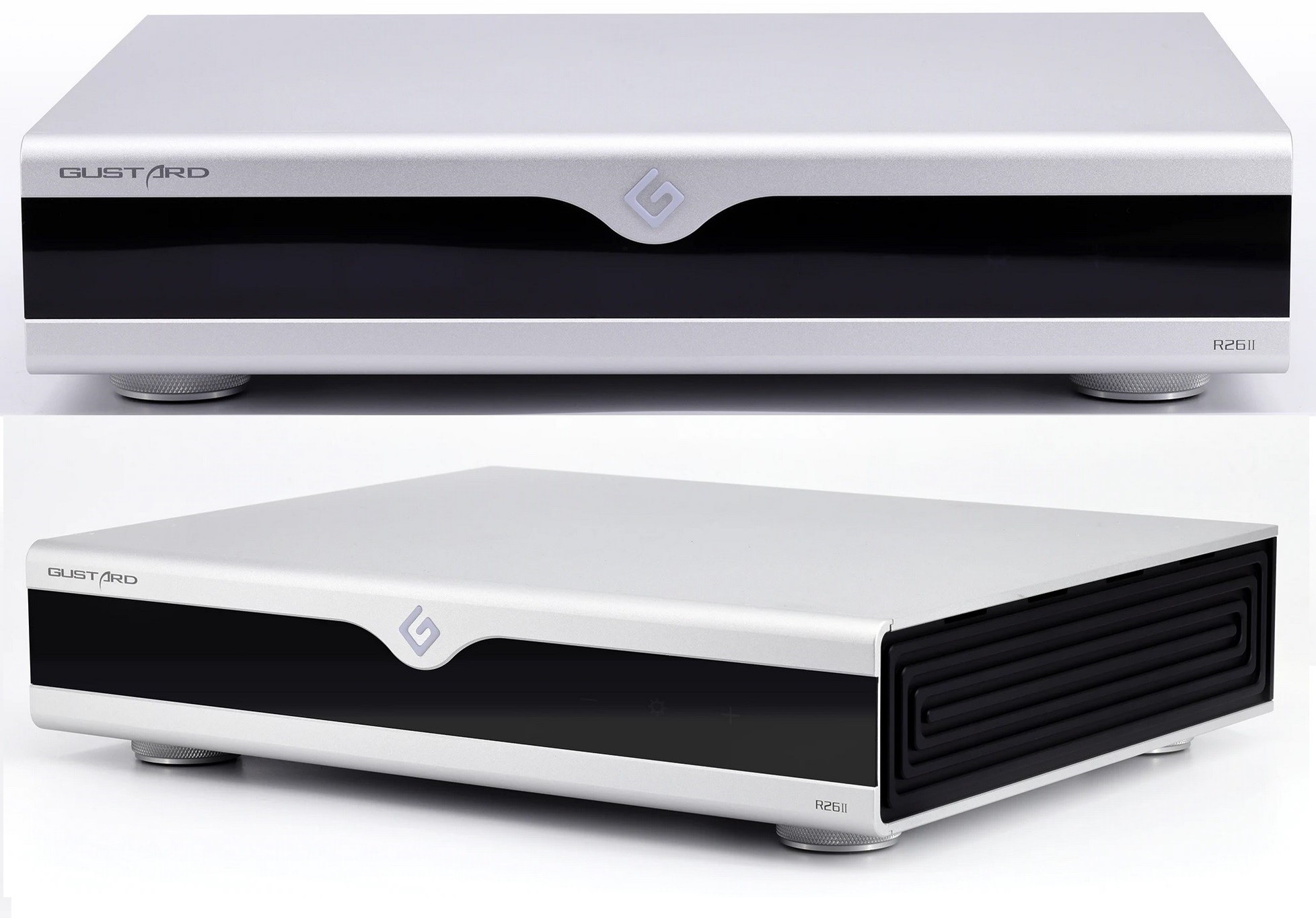
Power is handled by dual toroidal transformers, with fully separate supplies for digital and analog sections. The chassis is solid, sensibly damped, and finished with a configurable display offering multiple screensaver modes and adjustable brightness zones—because yes, even minimalists appreciate good UI at night.
The Gustard R26 II isn’t trying to be flashy. It’s not chasing AI processing, DSP wizardry, or lifestyle appeal. Instead, it’s aimed squarely at listeners who care about tone, texture, and timing—and who want a network-ready DAC that doesn’t compromise its core philosophy.
If you believe digital can sound organic, if R2R still makes sense to you, and if you want a serious DAC that happens to stream rather than a streamer that happens to convert, the R26 II feels very much on point.
Sometimes the coolest move in hi-fi is refusing to follow the crowd—and Gustard seems perfectly fine with that.



Join the discussion
Share your thoughts, listening impressions or product experience.