iBasso DC07 Pro Brings Desktop-Style Control to Mobile Audio
Built around four Cirrus Logic CS43131 chips and iBasso’s FPGA technology, the compact DC07 Pro combines substantial headphone output, low measured noise, dual 4.4 mm and 3.5 mm connections, and unusually direct onboard control.

Portable DAC and headphone amplifiers often prioritize minimal dimensions, but reducing size can also mean moving important settings into an app. The iBasso DC07 Pro takes a more self-contained approach. Despite weighing only 23 g, it incorporates a 0.96-inch OLED display, a multifunction rotary control, three output levels, and separate 4.4 mm and 3.5 mm headphone connections. Inside, four Cirrus Logic CS43131 chips work with iBasso’s FPGA technology, creating a compact audio component intended to serve both Android and iOS users without making a companion application central to everyday operation.
Four CS43131 chips at the heart of the design
The defining technical feature of the DC07 Pro is its use of four Cirrus Logic CS43131 chips. A multi-chip arrangement gives iBasso a substantial foundation for managing the two output paths while pursuing low distortion, wide dynamic range, and strong channel separation. The published figures indicate that the company has treated the DC07 Pro as more than a basic adapter between a phone and a pair of headphones.
iBasso also uses FPGA technology to manage the digital audio architecture and minimize jitter. Jitter is a timing error within the digital signal chain, so controlling it is an important part of designing a digital-to-analog converter. The presence of a dedicated FPGA is therefore notable in such a small product, particularly for owners who want a purpose-built audio stage rather than relying solely on the conversion and amplification available inside a mobile device.
The specified THD+N figure for the 4.4 mm output is -120.2 dB, or 0.000098%, measured at 1 kHz with a 300-ohm load. The 3.5 mm output is rated at -116 dB, or 0.00017%, under the same conditions. These are laboratory specifications rather than listening impressions, but they clearly document iBasso’s emphasis on suppressing unwanted distortion and noise within the conversion and amplification stages.
Two outputs for different headphone systems
The inclusion of both 4.4 mm and 3.5 mm headphone connections makes the DC07 Pro adaptable to a variety of portable systems. Owners can use conventional headphones and earphones fitted with a 3.5 mm plug, while equipment terminated for 4.4 mm operation can take advantage of the more powerful output path. This flexibility is useful for anyone who alternates between compact in-ear monitors and larger headphones or who already owns cables with both plug formats.
The distinction between the two paths is substantial. At 32 ohms, the 4.4 mm connection is specified to deliver 430 mW + 430 mW, while the 3.5 mm connection supplies 118 mW + 118 mW. At 16 ohms, those figures rise to 510 mW + 510 mW and 210 mW + 210 mW, respectively. These ratings explain why the 4.4 mm output is an important part of the product rather than simply an alternative socket.
Headphone compatibility cannot be determined from impedance alone; sensitivity and the owner’s preferred volume also matter. Nevertheless, the documented output figures give prospective users useful information for system matching. The DC07 Pro offers considerably more output through 4.4 mm, while the 3.5 mm path remains available for common portable headphones and earphones that do not require the same power reserve.
Selectable output levels improve system matching
The DC07 Pro provides low, middle, and high output settings for each headphone connection. Through 4.4 mm, the corresponding maximum output voltages are 2.8 Vrms, 3.5 Vrms, and 4 Vrms. The 3.5 mm connection offers 1.4 Vrms, 1.73 Vrms, and 2 Vrms. Rather than forcing every headphone to operate within a single output range, these settings allow the amplifier’s behavior to be adapted to different requirements.
Lower-output operation can be useful with sensitive earphones because it gives the user a more appropriate working range for volume adjustment. Higher-output operation is intended for headphones that need additional voltage. The ability to choose among three levels also makes sense in a portable product that may be paired with multiple headphones over the course of a day.
Low noise is another relevant consideration for sensitive equipment. iBasso specifies noise levels of 0.85 μV from the 4.4 mm connection and 0.76 μV from the 3.5 mm connection. The 4.4 mm path is rated for a 134 dBA signal-to-noise ratio and 134 dBA dynamic range, while the 3.5 mm path is rated at 129 dBA for both specifications. These figures position noise management as a central design priority, although real-world audibility will still depend on the connected earphones, listening level, recording, and surrounding environment.
Physical controls reduce dependence on software
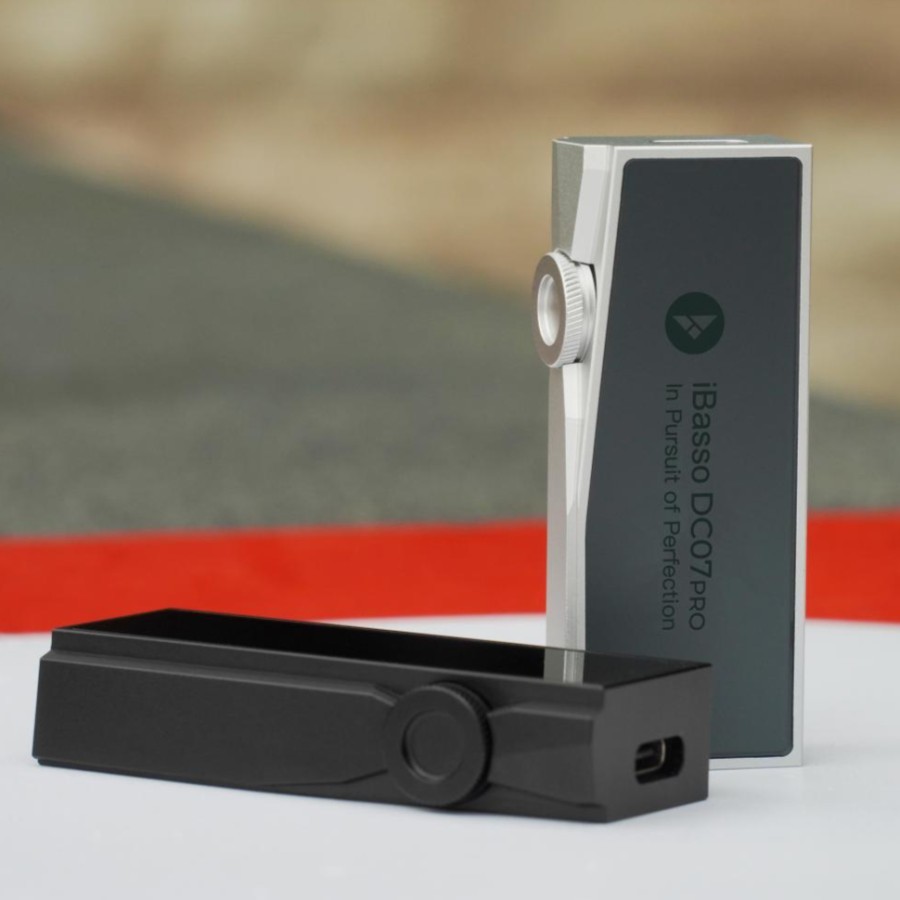
One of the DC07 Pro’s most practical design decisions is its 0.96-inch OLED screen. A display gives users a direct way to check operating information and configuration instead of having to infer the current state from a small status light. It is paired with a multifunction rotary control, bringing essential interaction onto the device itself.
This approach is particularly valuable in a product designed to work with both Android and iOS hardware. Mobile operating systems differ in how they manage accessories and applications, while software support can change over time. According to iBasso’s feature set, the DC07 Pro can be controlled and configured without requiring additional applications. That makes it easier to move the unit between compatible mobile devices without recreating an app-based setup each time.
A rotary control also offers a more tactile alternative to adjusting everything through a touchscreen. It keeps the DAC and amplifier responsible for its own principal controls, which can be convenient when a phone is locked, being used for another task, or stored in a pocket or bag. The combination of screen and dial gives the DC07 Pro some of the operational character of a standalone component while preserving its portable dimensions.
Compact enough for a genuinely mobile system
At 59 × 23.5 × 12.5 mm, the DC07 Pro occupies little space beside a smartphone or tablet. Its 23 g weight is equally significant: the device adds dedicated conversion and headphone amplification without introducing the bulk of a conventional battery-powered portable amplifier. Low power consumption is also part of iBasso’s design brief, an important consideration for a product intended to operate in conjunction with mobile devices.
The wide specified frequency response—10 Hz to 80 kHz at -0.5 dB through 4.4 mm and 10 Hz to 75 kHz at -0.5 dB through 3.5 mm—indicates broad analog bandwidth. Channel separation is rated at 142 dB for the 4.4 mm connection and 136 dB for 3.5 mm. Again, these are documented engineering figures rather than evidence of a particular sonic character, but they show the performance parameters iBasso has prioritized within the compact enclosure.
Its small format also makes the DC07 Pro relevant beyond commuting. It can form the audio core of a lightweight workplace setup, travel system, or bedside arrangement wherever a compatible Android or iOS source is used. Because both output standards are built in, changing headphones does not necessarily mean changing the DAC and amplifier as well.
Who the iBasso DC07 Pro is most suitable for
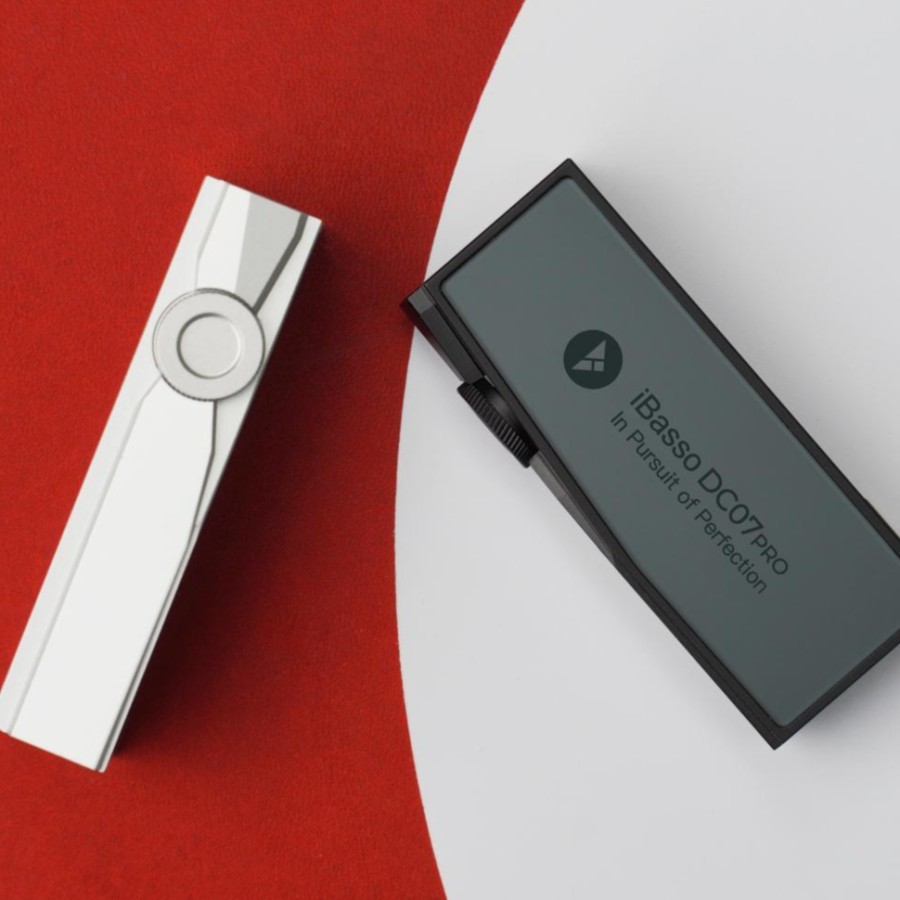
The DC07 Pro is best suited to listeners who use a phone or tablet as a principal music source but want a dedicated DAC and headphone amplifier with its own display and physical control. It is especially relevant to owners with a mixture of 3.5 mm and 4.4 mm headphones, as well as those who need a choice of output levels for earphones and full-size models with different sensitivities.
Its stronger 4.4 mm power figures make that connection particularly attractive for headphones that need more output than the 3.5 mm path provides. Conversely, users of sensitive in-ear monitors may value the low specified noise and the availability of lower output settings. The combination gives the product a broad intended role, although prospective owners should still compare their headphones’ requirements with the stated voltage and power figures.
Those seeking a large desktop component, extensive source switching, or a product selected primarily for loudspeaker-system integration will be looking at a different category. The DC07 Pro’s documented strengths are concentrated on personal audio, portability, direct control, and mobile compatibility. Its appeal therefore lies in doing more than a simple phone adapter while remaining much smaller than conventional desktop headphone electronics.
Conclusion
The iBasso DC07 Pro stands out through a carefully combined set of documented features: four Cirrus Logic CS43131 chips, FPGA-based digital management, separate 4.4 mm and 3.5 mm outputs, three output-voltage levels, low specified noise, and substantial power from its 4.4 mm connection. Its 0.96-inch OLED display and multifunction rotary control make configuration possible without depending on an additional app, while Android and iOS support broadens its role as a mobile audio component. At just 23 g, it is most compelling for listeners who want a compact, self-contained DAC and headphone amplifier capable of accommodating several types of headphones without giving up direct physical control.