3 Portable Music Players and Pocket Hi-Fi Upgrades to Know
A practical guide to three portable hi-fi options: the compact HiBy R3 II player, the iBasso DC-Elite DAC/amp, and the feature-rich Shanling M5 Ultra player.

Portable music listening now covers more than one kind of device.
Some listeners want a dedicated player with local storage, a screen, physical controls, and balanced headphone outputs.
Others are better served by a compact DAC and headphone amplifier that upgrades a phone, tablet, or computer without adding a full standalone player.

1. HiBy R3 II: New generation Hi-Res player
HiBy R3 II portable hi-res player with touchscreen, side volume wheel, and balanced headphone output.
The HiBy R3 II is the most compact, everyday-focused dedicated player in this selection.
Its revised pocket-sized design combines a 3.2-inch touchscreen with a raised volume wheel and physical media keys, so it is not dependent on touch operation alone.
The audio section is built around dual ES9219C DAC chips and supports 32-bit/384kHz PCM, native DSD256, and up to 16x MQA unfolding. Connectivity is also practical for modern IEM use, with both 4.4mm balanced and 3.5mm unbalanced outputs.
Best for: Compact everyday hi-res player
- Pocket-friendly design with touchscreen and physical controls
- Dual ES9219C DAC chipset
- Supports 32-bit/384kHz PCM, native DSD256, and 16x MQA
- Includes both 4.4mm balanced and 3.5mm outputs
Verdict: The HiBy R3 II is the easiest recommendation here for listeners who want a small standalone player with balanced output and broad hi-res format support.

2. iBasso DC-Elite: DAC and headphone amplifier based flagship components
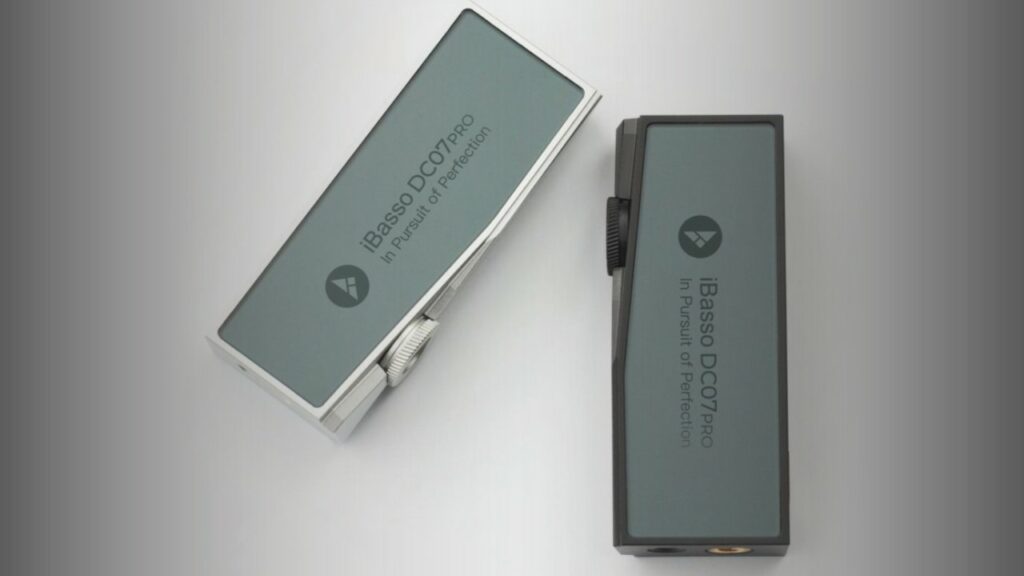
iBasso DC-Elite compact DAC and headphone amplifier with titanium-alloy body and 3.5mm and 4.4mm connections.
The iBasso DC-Elite is not a standalone music player, but it belongs in the portable listening conversation as a miniature DAC and headphone amplifier derived from iBasso’s flagship-player design work.
It uses a ROHM BD34301EKV current-output DAC chip and a 24-position attenuator, with 3.5mm and 4.4mm headphone connections.
The 3.5mm socket can also output a coaxial digital signal, adding flexibility beyond headphone listening. Its titanium-alloy body, tempered-glass section, 60.5-gram weight, and small dimensions make it a serious pocket DAC/amp for those who prefer to keep their existing source device.
Best for: Portable DAC/amp users rather than standalone-player buyers
- ROHM BD34301EKV DAC chip in a miniature device
- 24-position attenuator
- 3.5mm and 4.4mm headphone outputs
- Titanium-alloy body weighing 60.5 grams
Verdict: The iBasso DC-Elite is the right pick if the goal is to upgrade portable headphone output from another digital source instead of carrying a separate music player.
3. Shanling M5 Ultra: High-end portable player
Shanling M5 Ultra high-end portable player with angular aluminum design, touchscreen, hard buttons, and illuminated volume wheel.
The Shanling M5 Ultra is the larger and more feature-rich dedicated player in this group.
It moves away from a conventional Android approach in favor of Shanling’s proprietary MTouch system, paired with an Ingenic X2000 platform.
The interface is supported by a 4.7-inch HD touchscreen, three hard buttons, and an illuminated volume wheel. Its audio architecture combines AKM AK4499EX and AK4191 chips with a balanced amplifier based on Texas Instruments TPA6120A2, and the source describes playback options including USB DAC, DLNA, AirPlay, and Bluetooth receiver modes with Bluetooth 5.2 support.
Best for: Feature-rich dedicated portable player
- AKM AK4499EX and AK4191 chip combination
- Proprietary MTouch system instead of classic Android
- 4.7-inch HD touchscreen plus hard buttons and volume wheel
- USB DAC, DLNA, AirPlay, and Bluetooth receiver modes
Verdict: The Shanling M5 Ultra suits listeners who want a higher-end standalone player with multiple playback modes and a non-Android operating approach.
Frequently asked questions
Should I choose a dedicated portable music player or a portable DAC/amp?
Choose a dedicated player if you want a self-contained device for local files, screen-based browsing, physical controls, and headphone outputs in one unit.
Choose a portable DAC/amp such as the iBasso DC-Elite if you already use another digital source and mainly want to improve headphone output quality and connection options.
Why does a 4.4mm balanced output matter?
A 4.4mm balanced output gives compatible headphones and IEM cables a balanced connection option.
In this selection, both the HiBy R3 II and iBasso DC-Elite include 4.4mm alongside 3.5mm, while the Shanling M5 Ultra is described with a balanced amplifier design.
Is Android necessary on a portable music player?
Not necessarily.
The Shanling M5 Ultra specifically uses Shanling’s MTouch system rather than a classic Android operating system.
That can appeal to listeners who prefer a dedicated music-focused interface, though app flexibility depends on the player’s own supported functions and firmware.
Which features should matter most for local hi-res music files?
Look for format support, storage access, usable controls, and the headphone outputs you need.
From the supplied players, the HiBy R3 II clearly lists support for 32-bit/384kHz PCM, native DSD256, and up to 16x MQA, while the Shanling M5 Ultra emphasizes its DAC architecture, MTouch interface, and multiple playback modes.
How to choose the right portable music player
Start with the role the device needs to fill.
If you want the smallest standalone hi-res player in this group, the HiBy R3 II is the clearest fit: it is pocket-friendly, supports a wide range of hi-res formats, and includes both balanced and unbalanced headphone outputs.
If you do not need a separate player at all, the iBasso DC-Elite is better understood as a high-grade portable DAC and headphone amplifier for use with another digital source; its compact titanium-alloy build, 24-position attenuator, and dual headphone outputs make it the specialist option rather than the all-in-one option. If you want a more ambitious dedicated player with a larger screen, proprietary operating system, AKM-based architecture, and several playback modes, the Shanling M5 Ultra is the most feature-rich player covered here. Before buying, check your headphone cable termination, your preferred file formats, whether you need streaming or local playback, and whether you value the simplicity of a dedicated player over the flexibility of using a separate DAC/amp with an existing device.