


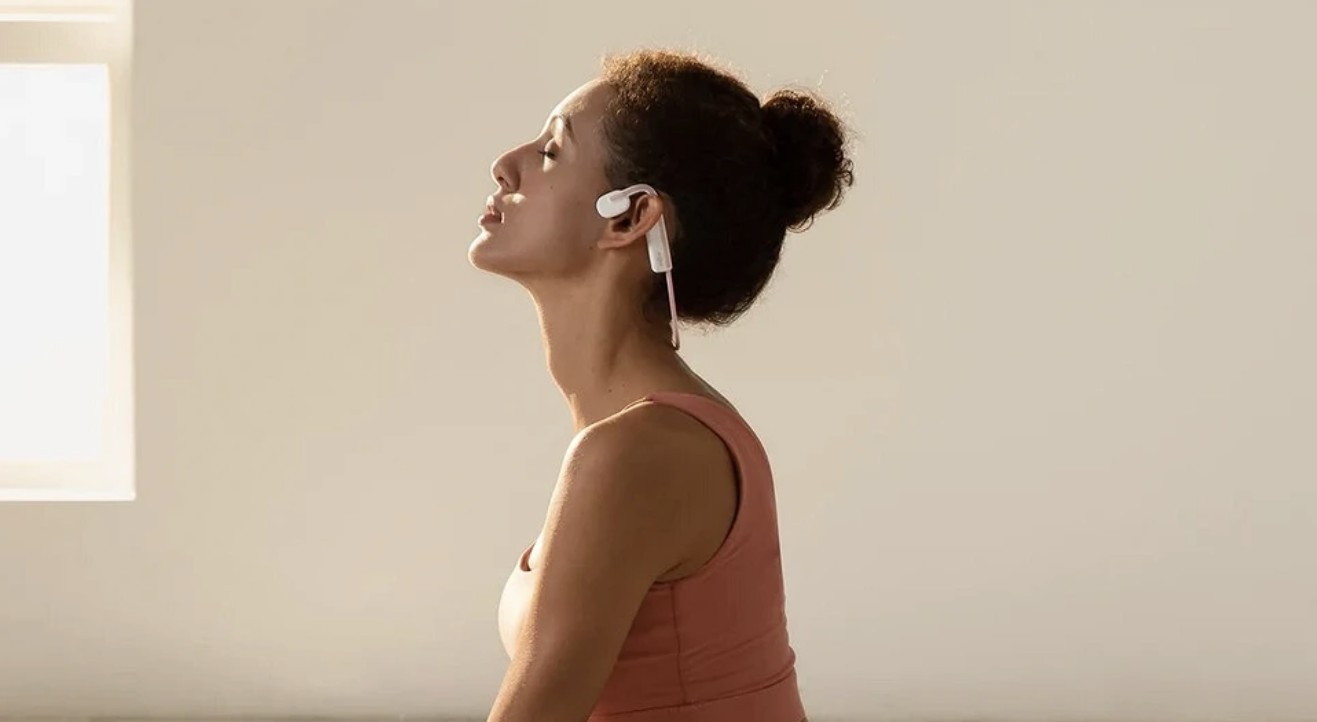
We understand one of the most unusual types of audio accessories for those who want to listen to music and hear the surroundings.
When choosing headphones, the main criteria are usually the type of headphones, on-ear or in-ear, as well as the type of connection to the device, with or without a wire. The rest of the selection of headphones is about personal musical preferences and attachment to a particular brand. Headphones based on bone conduction technology remain a fairly niche solution, not least due to the fact that a wide audience has a poor idea of how such an accessory works and what are its advantages. Therefore, we will examine the issue in detail.
What is bone conduction
Sound is a wave that in the human body is captured by the ear and then “decoded” by the brain. This is if it is very primitive to describe the structure of such a complex organ of the human body as the ear. In addition, each ear consists in turn of three ears at once.


The outer ear is the auricle and ear canal, which pick up sounds and send them to the middle ear. In the middle care is the tympanic cavity (the tympanic membrane separates the outer ear from the middle one) with three auditory bones – the hammer, anvil and stirrup, which are the smallest bones of the skeleton and serve to transmit sound vibrations from the outer ear to the inner, in parallel amplifying these vibrations. Well, the inner ear is responsible for the formation and transmission of nerve impulses caused by sound, which the brain turns into sound. In addition, the inner ear is also responsible for human balance. But this has nothing to do with headphones.
Since sound is a wave, and waves can be transmitted not only through air, but also through liquid and solid media, the principle of bone conduction is based on this. Why send sound into the outer (roughly speaking, through on-ear headphones) or middle (using in-ear or earplugs) ear when it can be sent straight to the inner ear using the bones of the skull? In particular, the zygomatic bone (you can tell where it is by swiping your finger from the edge of the eye towards the auricle) is able to effectively transmit sound waves directly to the inner ear, so that you can listen to music through headphones while keeping the ear canal open. Music in the headphone speakers causes an almost imperceptible vibration of the zygomatic bone, which is perceived by the auditory ossicles and converted into sound.
The principle of bone conduction was discovered at the beginning of the 15th century and was originally used to help deaf people (for example, the famous composer Ludwig van Beethoven listened to his own compositions in the process of work, albeit with the help of improvised means, but using the principle of bone conduction), and then with the development of technology bone conduction formed the basis of hearing aids, microphones and, of course, headphones. Currently, such accessories are used by athletes, the military, scuba divers and representatives of other professions that are associated either with work in conditions of constant noise, or with situations where the use of conventional headphones and microphones is impossible for other reasons.
Pros and Cons of Bone Conduction Headphones
The main advantage of such accessories is the ability to listen to music while maintaining full control over the environment around. Since the ear canal remains open, you can hear what is going on around you. That’s why athletes prefer bone conduction headphones to conventional headphones – you can run, ride a bike and engage in any other physical activity without the risk of being hit by wheels or missing the coach’s command. In addition, you can use these accessories at home, which will allow you to hear doorbells, home appliance signals and other important notifications.

From a technical point of view, bone conduction headphones are no different from other headphones and even headsets. You can listen to music or conduct telephone conversations in them – neither you nor your interlocutor will feel any difference. In addition, such accessories are the best solution for people who, for some reason, cannot use classic over-the-ear headphones.
True, it was not without drawbacks in headphones with bone conduction. The first is the sound quality. Given the principle of operation, it is impossible to achieve the same purity of sound as in traditional accessories. The second is a high probability that others will hear your music or your interlocutor on a telephone conversation. However, any headphones are not without this drawback. The third is the dimensions of the headphones. For attachment to the cheekbones, either massive earpieces or a headband are required, so bone conduction headphones will in any case be larger and heavier than classic wireless “earbuds” or “plugs”.
Are bone conduction headphones safe for health?
In short, yes. From the point of view of the impact on the human body, these are exactly the same headphones as any other type – if you listen to music too loudly or for too long, it can adversely affect your hearing. Otherwise, such a solution seems even more preferable. Bone conduction headphones do not disturb the microflora in the ear canal and do not irritate it with the presence of foreign objects inside, and the ability to hear the environment increases safety for a person wearing headphones.

There are quite a few on the market – although, of course, less than headphones of other designs – bone conduction headphones. The most famous are products of the AfterShokz brand, which specializes in such accessories, but such headphones are also produced by Philips, Xiaomi under the Padmate brand, as well as a number of other companies.
Even Google Glass and Bose Frames can be considered a kind of bone-conducting headphones, since in these smart glasses, sound reproduction technologies are also responsible for transmitting waves to the inner ear through the bones of the skull. In a word, among such products you can find the ones that suit your taste and wallet.
Well, if it’s more important for you to isolate yourself from the surrounding reality than to be aware of the events around you, then check out our selection of the best active noise canceling wireless headphones .