
Stereoindex Amplifier Favorites for Serious Hi-Fi Systems
A practical Stereoindex amplifier guide covering heavyweight Class A monoblocks, premium integrated amplifiers, compact digital-ready models, tube amplification, and flexible analog systems.

Choosing an amplifier is less about chasing a single headline specification and more about matching architecture, connectivity, power delivery, and daily usability to the system around it.
The models gathered here range from heavyweight mono power amplifiers to compact desktop integrated designs, so the right choice depends on whether you need a system anchor, a space-saving hub, a tube-flavored amplifier, or a flexible all-in-one solution.
This selection is based strictly on the supplied product material. Where the source gives detailed topology, power, input, or construction information, those distinctions are highlighted. Where the source is more general, the recommendation stays accordingly cautious and focuses only on what is supported. The result is not a ranked claim that one amplifier is universally superior. Instead, it is an editorial shortlist of distinct amplifier types: pure Class A muscle, high-power monoblocks, premium integrated amplifiers, compact digital-ready designs, tube amplification, and versatile stereo units suited to modern source collections.
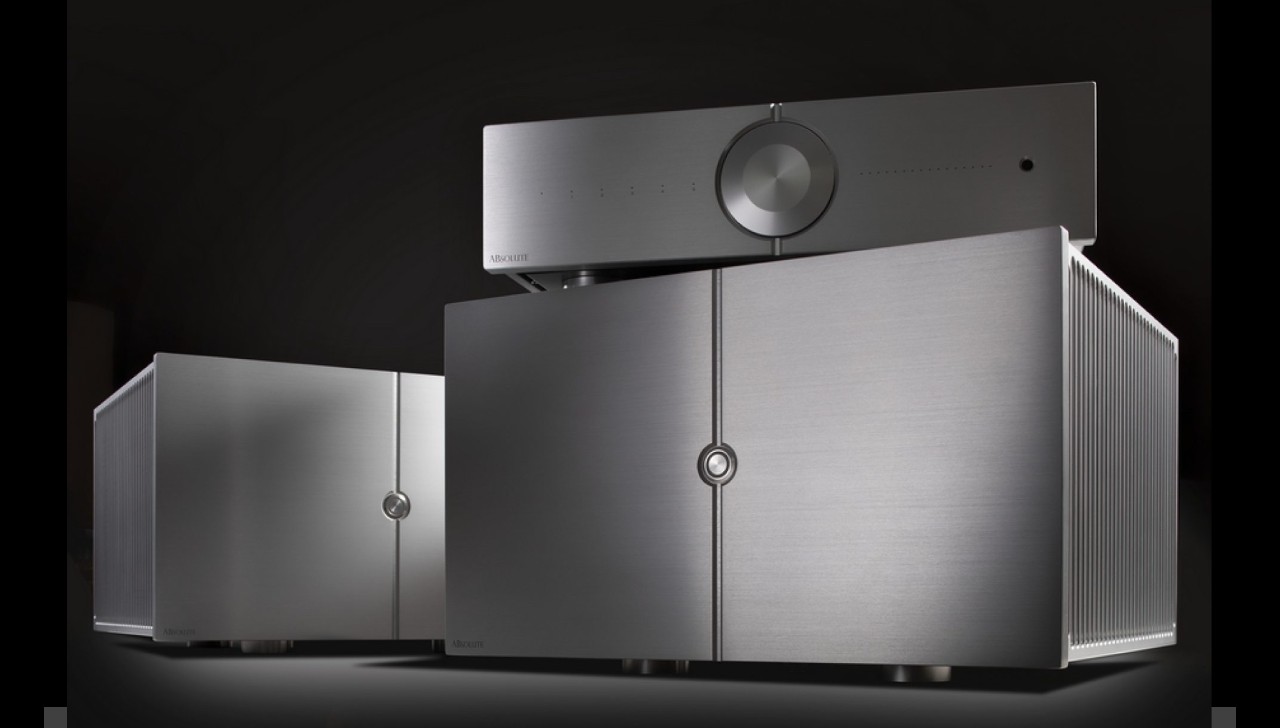
1. Audio Analogue ABsolute Monoblock: 100 Watt class A mono power amplifier
Audio Analogue ABsolute Monoblock, a large Class A mono power amplifier intended for free-standing installation because of normal operating heat.
The Audio Analogue ABsolute Monoblock is a flagship mono power amplifier built around a demanding Class A concept.
It is physically substantial, at 72 kilograms, and the manufacturer recommends free installation because heat is a normal part of its Class A operation.
The supplied material emphasizes a fully symmetrical, feedback-free topology, a specially designed large toroidal transformer, and output stages using two bridged sections with twelve transistor pairs in total. Its stated output is 100 watts of Class A power into eight ohms, with constant wall-socket draw even at idle, making it a serious choice for listeners who understand the space, heat, and energy implications of pure Class A amplification.
Best for: Dedicated high-end systems built around separate monoblock amplification
- 100 watts of Class A power into eight ohms
- Fully symmetrical, feedback-free topology
- Specially designed large toroidal transformer
- Substantial mono chassis for dedicated power amplification
Verdict: A purist, heavyweight Class A monoblock for systems where installation space, heat management, and serious power delivery are planned from the start.
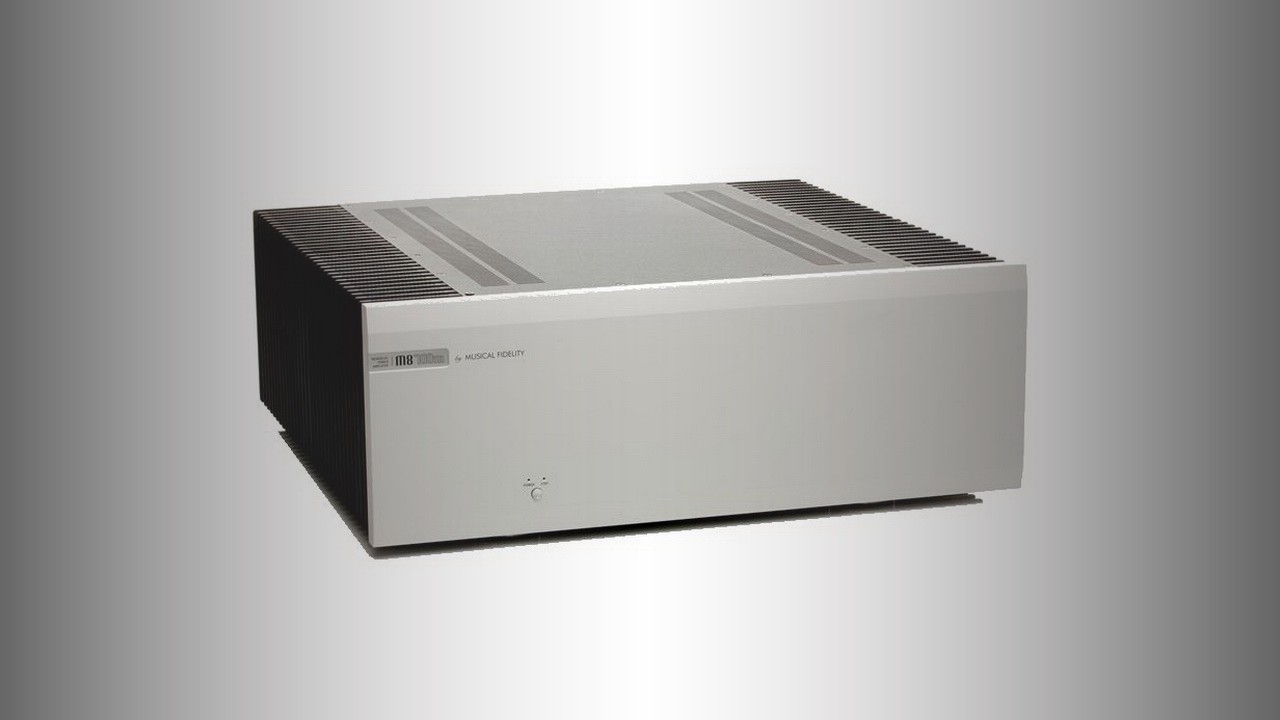
2. Musical Fidelity M8 700m: Premium mono power amplifier
Musical Fidelity M8 700m mono power amplifier with restrained external design and internal emphasis on power supply and amplification sections.
The Musical Fidelity M8 700m is presented as a premium mono power amplifier shaped by the company’s view that investment should go into parts that affect performance rather than decorative metalwork.
The source describes a welded steel chassis, substantial heat sinks, thick but restrained front panels, and internal emphasis on electronic components, circuit boards, and power transformers.
Each amplifier contains a pair of amplification sections connected in a bridge circuit, two independent power supplies, and a balanced converter for phase matching. It also supports dual-cable speaker connection and bi-amplifier connection, making it a practical high-power monoblock for users building a separates system with flexible loudspeaker wiring options.
Best for: Separates systems needing premium monoblock power with practical connection flexibility
- Bridge-connected amplification sections
- Two independent power supplies
- Dual-cable speaker connection supported
- Bi-amplifier connection supported
Verdict: A function-first monoblock that puts the editorial emphasis on internal engineering, power supply provision, and speaker-connection options rather than decorative excess.

3. Accuphase E-380: Takes the sound quality of an integrated amplifier to a new level
Accuphase E-380 integrated amplifier, positioned by the source within Accuphase’s precision-focused hi-fi design philosophy.
The Accuphase E-380 is framed in the source as part of Accuphase’s long-standing pursuit of high-fidelity sound reproduction and careful production standards.
The article emphasizes the company’s focus on accuracy, precision, and sound reproduction rather than trend-driven product design.
Specific circuit or power details for the E-380 are not provided in the supplied excerpt, so the strongest supported reason to consider it is its place within Accuphase’s quality-focused integrated amplifier tradition. It suits buyers who want an integrated amplifier from a manufacturer described as selective in production and distribution, rather than one chasing mass-market positioning.
Best for: Listeners prioritizing a premium integrated amplifier from a quality-led specialist brand
- Integrated amplifier format
- Associated with Accuphase’s high-fidelity design philosophy
- Production approach described as quality-focused rather than assembly-line driven
Verdict: A cautiously recommended Accuphase integrated amplifier for buyers drawn to the brand’s stated commitment to accuracy, precision, and high-fidelity reproduction.

4. TEAC AI-303: Compact integrated amplifier
TEAC AI-303 compact integrated amplifier with HDMI ARC, USB Type-C, digital inputs, analog inputs, and a high-efficiency Class D output stage.
The TEAC AI-303 is the most obviously space-conscious amplifier in this selection.
Its compact design is specifically described as suitable for a computer desk or placement next to a TV, and its feature set reflects that role.
It adds HDMI ARC and USB Type-C compared with its predecessor, includes optical and coaxial S/PDIF inputs, RCA analog inputs, and uses a 32-bit DAC supporting DSD up to 11.2 MHz, PCM up to 32-bit/384 kHz, and full MQA decoding. The final section uses a high-efficiency Hypex Class D amplifier module with stated maximum output of 50 watts per channel into four ohms. Auto power-on with a digital signal and auto power-off after inactivity make it especially convenient for TV or desktop use.
Best for: Compact TV, desktop, and digital-source systems
- Compact enough for desk or TV placement
- HDMI ARC and USB Type-C included
- 32-bit DAC with DSD, PCM, and MQA support
- Auto power-on and power-off functions for digital-source use
Verdict: A compact integrated amplifier with unusually practical modern connectivity for listeners who need a small hi-fi hub rather than a full-size separates component.

5. Rogers E20a II – British 6L6GT tube amplifier
Rogers E20a II tube amplifier with anodized metal panels, protective perforated tube grille, and 6L6GT output stage design.
The Rogers E20a II revives and updates the company’s E20a tube amplifier with a revised case made from anodized metal panels.
The curved perforated metal grille protects the tubes while allowing cooling, and the source notes that the enclosure also provides shielding for the circuit.
Its output stages use 6L6GT beam tetrodes, and the stated output is up to 18 watts per channel. The basic switching arrangement includes three line inputs on gold-plated RCA connectors, while an optional built-in MM phono stage based on 12AX7 tubes is offered for vinyl users. This is a compact, traditional tube-amplifier proposition for systems built around efficient loudspeakers and analog sources.
Best for: Analog-focused systems seeking a low-power tube integrated amplifier
- 6L6GT tube output stages
- Up to 18 watts per channel
- Three line inputs on gold-plated RCA connectors
- Optional MM phono stage based on 12AX7 tubes
Verdict: A straightforward British tube amplifier update with classic valve hardware, simple RCA input provision, and an optional MM phono route.

6. SMSL A300: High-quality desktop-grade power amplifier
SMSL A300 desktop-grade power amplifier with compact aluminum panel, OLED display, Bluetooth, USB, RCA, and bridged-mode capability.
The SMSL A300 is a desktop-grade power amplifier with a compact aluminum-panel chassis, OLED display, remote control, and a broad feature list for small hi-fi systems.
The source highlights an Infineon digital amplifier chipset, electronic volume control using a Japanese NJW1194 NJRC chip, Bluetooth 5.0, RCA, USB, stereo and bridged single-channel operating modes, and suitability for 2.1-channel systems.
Its stated stereo output is 165 watts per channel into four ohms and 85 watts per channel into eight ohms, with a bridged mode rated at 330 watts into four to eight ohms. At 1.3 kilograms and with compact dimensions, it is a practical option where a full-size amplifier is unnecessary.
Best for: Desktop passive-speaker systems and compact 2.1-channel setups
- Infineon digital amplifier chipset
- Stereo and bridged single-channel modes
- Bluetooth 5.0, RCA, and USB inputs
- Compact chassis with OLED display and remote control
Verdict: A small, feature-rich power amplifier for desktop and compact systems that need modern inputs, remote operation, and flexible amplification modes.

7. Vincent SP-T700: A serious and worthy instrument for exploring music
Vincent SP-T700 monoblock amplifier with visible front tube illumination, tube driver stages, transistor output devices, and toroidal transformer arrangement.
The Vincent SP-T700 is a monoblock amplifier that combines tube stages with transistor output devices.
The source describes it as related in dimensions and design to the SP-T800 and notes a suspended toroidal transformer, a 6S3P used as a voltage-to-current converter, a 6ZH9P pentode driver, and three complementary pairs of Toshiba bipolar transistors in the output stage.
It operates in Class A for the first few watts before moving smoothly into Class AB. The front-panel tube illumination can be adjusted or turned off, which gives the amplifier a visual identity without forcing the lighting effect on the user. The source also describes the sound character as even, slightly softened, and carrying a tube accent while remaining elastic, so it is best read as a hybrid monoblock for listeners who want some tube character with transistor output architecture.
Best for: Listeners interested in hybrid monoblocks with visible tube character
- Hybrid tube and transistor design
- Class A operation for the first few watts before Class AB
- Toroidal transformer power supply arrangement
- Adjustable or switchable front tube illumination
Verdict: A distinctive hybrid monoblock that combines tube-stage presentation, transistor output devices, and adjustable visual styling.

8. Creek Audio 4040 A: Classic integrated amplifier reborn
Creek Audio 4040A integrated amplifier with analog and digital inputs, Bluetooth connectivity, ES9023 Sabre DAC, and optional phono expansion.
The Creek Audio 4040A is a flexible integrated amplifier designed as a modern take on a classic Creek concept.
Its analog inputs include two unbalanced RCA sets and one fully balanced XLR set, while digital connectivity includes USB, coaxial S/PDIF, optical Toslink, USB Class 2, and aptX Bluetooth 5.0.
The source also notes an ES9023 Sabre DAC, electronic volume control in 1 dB steps across a 70 dB range, channel balance, tone controls, and equalizer settings. Vinyl users can replace Aux 2 with a Sequel mk4 phono preamp plug-in for MM and MC cartridges. The source places particular emphasis on the regulated 250-watt high-frequency power supply, which is optimized for audio electronics and described as able to double output power when load impedance is halved.
Best for: Modern integrated systems needing analog, digital, Bluetooth, and optional vinyl support
- Balanced XLR and unbalanced RCA analog inputs
- USB, coaxial, optical, and aptX Bluetooth 5.0 digital connectivity
- Optional Sequel mk4 phono plug-in for MM and MC cartridges
- Electronic volume control with balance, tone, and equalizer settings
Verdict: A highly versatile integrated amplifier for listeners who want one compact control center for analog sources, digital sources, Bluetooth, and optional phono playback.

9. Marantz PM-KI Ruby: Integrated amplifier with a fully discrete two-stage design
Marantz PM-KI Ruby integrated amplifier with dual-layer chassis, toroidal transformer, discrete two-stage design, and MM/MC phono section.
The Marantz PM-KI Ruby is an integrated amplifier designed under the direction of Ken Ishiwata and built around a fully discrete two-stage layout with separate power supplies for the preamplifier and power amplifier sections.
The source highlights influence from the flagship PM-10, a dual-mono amplifier circuit, Marantz Musical Premium Phono EQ for MM and MC cartridges, proprietary HDAM modules, a high-power toroidal transformer in a protective screen, and selected components.
Its stated output is 100 watts per channel into eight ohms or 200 watts per channel into four ohms. Construction details include a vibration-resistant dual-layer chassis, thick aluminum panels, nickel-plated input terminals, and high-purity copper speaker posts. It is a strong fit for buyers who want a serious integrated amplifier with built-in phono capability and substantial internal separation.
Best for: Premium integrated systems requiring strong analog architecture and built-in MM/MC phono support
- Fully discrete two-stage design
- Separate power supplies for preamp and power amp sections
- MM and MC phono section with Marantz Musical Premium Phono EQ
- 100 watts per channel into eight ohms and 200 watts per channel into four ohms
Verdict: A carefully specified Marantz integrated amplifier that combines discrete construction, separate internal power sections, and serious phono provision.
10. Musical Fidelity M2Si: Highly recommended integrated amplifier
Musical Fidelity M2Si integrated amplifier with analog input flexibility, toroidal-transformer supply arrangement, and HT mode on AUX 1.
The Musical Fidelity M2Si is an integrated amplifier built around established technical solutions drawn from the company’s higher lines.
The source describes separate power supply arrangements for preamplifier and final sections using separate windings of a toroidal transformer, a pure Class A preamplifier circuit, and Class AB power stages.
It also notes a peak output current of 25 amps, six analog inputs, and an AUX 1 input that can be switched to HT mode for use in a home theater system. Musical Fidelity’s surface-mount component approach is described as reducing printed conductor length, lowering linear capacitance and inductance, and helping extend frequency band and dynamic range. This is a practical analog integrated amplifier for buyers who want conventional connectivity, home-theater integration, and a robust internal power architecture.
Best for: Analog stereo systems that may also integrate with a home theater setup
- Separate power supply arrangements for preamp and final sections
- Pure Class A preamplifier circuit with Class AB power stages
- Six analog inputs
- AUX 1 can be switched to HT mode
Verdict: A sensible analog integrated amplifier with a strong internal power-supply story, multiple inputs, and useful HT bypass functionality.
Quick comparison
These amplifiers differ most clearly by format, system role, connectivity, and amplifier architecture.
The table below keeps the distinctions high-level and source-grounded rather than reducing very different products to a single score.
| Product | Best for | Verdict |
|---|---|---|
| Audio Analogue ABsolute Monoblock | Dedicated high-end systems built around separate Class A monoblocks | Choose it for pure Class A mono amplification if you can accommodate its size, heat, and constant power draw. |
| Musical Fidelity M8 700m | Premium separates systems needing monoblock power and flexible speaker wiring | Choose it for a restrained, engineering-led monoblock with bridged amplification sections and dual power supplies. |
| Accuphase E-380 | Premium integrated-amplifier buyers drawn to Accuphase’s high-fidelity philosophy | Choose it when brand philosophy, precision-focused production, and integrated simplicity matter more than published feature density. |
| TEAC AI-303 | Desktop, TV, and compact digital systems | Choose it for HDMI ARC, USB Type-C, high-resolution DAC support, and compact placement flexibility. |
| Rogers E20a II | Analog-oriented tube systems with suitable loudspeakers | Choose it for a 6L6GT tube amplifier with simple line inputs and optional MM phono capability. |
| SMSL A300 | Small passive-speaker systems, desktops, and compact 2.1-channel setups | Choose it for a compact digital amplifier with Bluetooth, USB, RCA, remote control, and bridged-mode operation. |
| Vincent SP-T700 | Systems seeking hybrid monoblock amplification with visible tube styling | Choose it for a tube-and-transistor monoblock that starts in Class A for the first few watts before moving to Class AB. |
| Creek Audio 4040A | Versatile modern integrated systems using analog, digital, Bluetooth, and optional vinyl sources | Choose it for broad input flexibility, electronic control features, and an optional MM/MC phono plug-in. |
| Marantz PM-KI Ruby | Premium integrated systems with serious analog and phono requirements | Choose it for a fully discrete two-stage integrated amplifier with separate internal power supplies and MM/MC phono support. |
| Musical Fidelity M2Si | Analog stereo systems that may need home-theater integration | Choose it for six analog inputs, HT mode, separate supply arrangements, and a Class A preamp stage. |
Frequently asked questions
Should I choose an integrated amplifier or a separate power amplifier?
Choose an integrated amplifier if you want source switching, volume control, and amplification in one box, as with the TEAC AI-303, Creek Audio 4040A, Marantz PM-KI Ruby, or Musical Fidelity M2Si.
Choose separate mono power amplifiers such as the Audio Analogue ABsolute Monoblock, Musical Fidelity M8 700m, or Vincent SP-T700 when you already have or plan to use a suitable preamplifier and want dedicated amplification for each channel.
What should I check before buying a Class A amplifier?
Class A amplifiers can run warm and may draw significant power even when no music is playing.
The Audio Analogue ABsolute Monoblock source specifically notes free installation, normal operating heat, and constant power draw at idle, so placement, ventilation, and energy use should be considered before purchase.
Which amplifiers here are most suitable for TV or desktop use?
The TEAC AI-303 is the clearest TV and desktop fit because the source specifically mentions compact placement near a computer desk or TV, HDMI ARC, USB Type-C, and automatic power behavior with digital signals.
The SMSL A300 is also desktop-oriented, with a compact chassis, Bluetooth, USB, RCA inputs, OLED display, and remote control.
Do any of these amplifiers support vinyl playback?
Yes, but in different ways.
The Marantz PM-KI Ruby includes an MM/MC phono section using Marantz Musical Premium Phono EQ.
The Creek Audio 4040A can accept an optional Sequel mk4 phono preamp plug-in for MM and MC cartridges. The Rogers E20a II can be ordered with an optional MM phono stage based on 12AX7 tubes. For the other models, the supplied material does not establish built-in phono support.
How to choose the right amplifier from this shortlist
Start with system architecture.
If you want a simple one-box stereo hub, focus on integrated amplifiers: the TEAC AI-303 for compact TV or desktop systems, the Creek Audio 4040A for broad analog and digital flexibility, the Marantz PM-KI Ruby for premium integrated amplification with MM/MC phono support, the Musical Fidelity M2Si for analog input flexibility and HT mode, or the Accuphase E-380 if Accuphase’s quality-led integrated-amplifier approach is the main attraction.
If you are building a separates system, narrow the choice by amplifier behavior and installation demands. The Audio Analogue ABsolute Monoblock is the most explicitly purist Class A option here, but it requires serious space, ventilation, and acceptance of constant power draw. The Musical Fidelity M8 700m is a premium monoblock described around internal investment, bridged amplification sections, and dual power supplies. The Vincent SP-T700 offers a hybrid route, using tube stages and transistor outputs, with Class A operation for the first few watts before Class AB. Connectivity should be treated as a requirement, not an afterthought. TV users should prioritize HDMI ARC on the TEAC. Digital-source users may look toward the TEAC, Creek, or SMSL depending on system scale. Vinyl users should focus on the Marantz, the optionally equipped Creek, or the optionally equipped Rogers. Listeners with only analog line sources may find the Musical Fidelity M2Si or Rogers E20a II more direct. Finally, match ambition to practical ownership. Large Class A and monoblock designs demand space and system planning. Tube designs require appropriate loudspeaker matching and acceptance of valve-based operation. Compact digital amplifiers bring convenience and placement flexibility. The strongest purchase will be the amplifier whose format, inputs, power architecture, and installation needs fit the rest of the system without forcing compromises elsewhere.