10 Home Cinema Recommendations for Disc, Receiver and Soundbar Setups
A practical home cinema shortlist covering AV receivers, a universal disc player, a stereo receiver and Dolby Atmos soundbar guidance, with each option matched to the kind of room and system it suits.
A good home cinema system starts with matching the component to the room, the sources and the level of complexity you are willing to manage.
Some systems need a serious universal disc player, others need a capable AV receiver with room calibration, while smaller spaces may be better served by a compact Dolby Atmos soundbar.
This curated selection draws from Stereoindex source material covering universal players, AV receivers, a stereo receiver and a soundbar roundup. The emphasis is practical: supported surround formats, HDMI flexibility, room-tuning tools, amplification approach, disc playback and straightforward system use. The list is not a single-template ranking. A flagship 13.2-channel amplifier and an entry-level stereo receiver are useful for very different buyers. The aim is to show where each product or article fits, so a shortlist can be built around real system needs rather than specification overload.
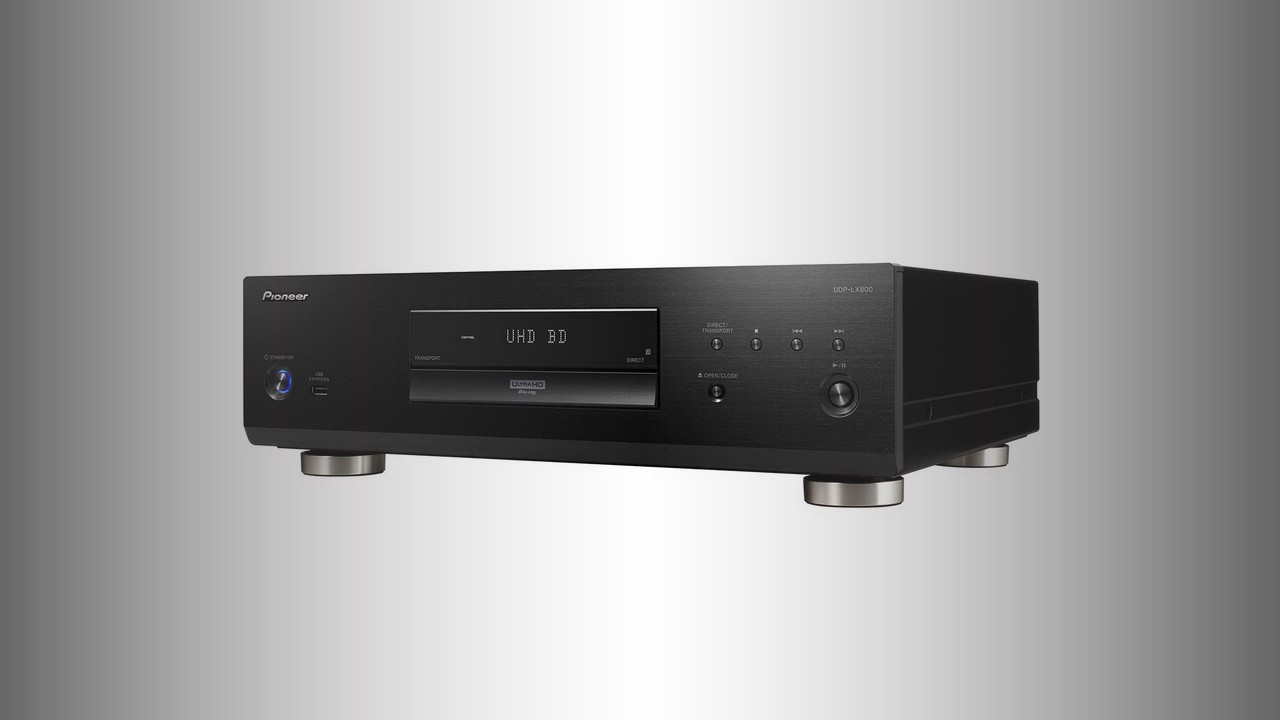
1. Pioneer UDP-LX800: Top-class universal player
Pioneer UDP-LX800 universal disc player with support for Ultra HD Blu-ray, SACD and separate HDMI audio/video output.
The Pioneer UDP-LX800 is the source component here for serious disc-based systems.
It plays CD, DVD, DVD-Audio, DVD-Video, SACD and Ultra HD Blu-ray, and it supports HDR formats including Dolby Vision and HDR10.
The construction is unusually elaborate for a video source, with an anti-vibration optical drive assembly, isolated internal sections for power, digital and analog circuitry, and a 13.8 kg chassis. It also offers two HDMI outputs, allowing video and audio streams to be sent separately, while PQLS is available over HDMI with compatible Pioneer AV receivers to help minimize jitter.
Best for: Disc-led home cinemas with CD, SACD and Ultra HD Blu-ray libraries
- Plays CD, DVD, DVD-Audio, DVD-Video, SACD and Ultra HD Blu-ray
- Supports Dolby Vision and HDR10
- Two HDMI outputs for separate video and audio streams
- Anti-vibration drive housing and isolated internal sections
Verdict: A heavyweight universal player for systems where physical media quality and robust construction matter more than streaming convenience.

2. Yamaha R-N600A: Powerful Entry-level Stereo Receiver
Yamaha R-N600A stereo receiver with front-panel display, input selection and tone, balance and loudness controls.
The Yamaha R-N600A is not a surround receiver, but it earns a place for users who want a simpler two-channel entertainment system.
Built around Yamaha’s ToP-ART concept, it uses separate power supplies for digital and analog sections, proprietary circuit topology and an ART Base chassis intended to reduce the influence of noise, vibration and resonance.
The receiver also includes ESS SABRE ES9010K2M DACs, Pure Direct mode and a smooth loudness control, making it more relevant to music-first systems than multi-speaker cinema installations.
Best for: Two-channel TV and music systems rather than surround cinema rooms
- ToP-ART design with separate digital and analog power supplies
- ESS SABRE ES9010K2M DACs
- Pure Direct mode bypasses tone, balance and buffer stages
- ART Base chassis design targets noise, vibration and resonance
Verdict: A stereo-focused receiver for buyers who prioritize clean two-channel reproduction over immersive surround formats.

3. Best soundbars
Dolby Atmos soundbars can provide a simpler home cinema layout than a receiver with multiple separate speakers.
This source article is a soundbar roundup rather than a single product review, and its home cinema value lies in compact Dolby Atmos alternatives to separate-speaker systems.
The excerpt highlights the Bose Smart Soundbar 600 as a compact 3.0.2 model with upward-firing speakers, Dolby Atmos and strong dialogue handling, plus AirPlay 2 and Chromecast.
It also describes the Sonos Arc as a 5.0.2 Dolby Atmos soundbar with Dolby TrueHD and Dolby Digital Plus support, suited to users invested in the Sonos ecosystem. As a category, it is the most space-efficient route in this selection.
Best for: Compact rooms and users who want fewer boxes and speakers
- Includes Dolby Atmos soundbar options
- Bose Smart Soundbar 600 uses upward-firing speakers
- Bose model is praised for clear dialogue processing
- Sonos Arc supports Dolby Atmos, Dolby TrueHD and Dolby Digital Plus
Verdict: A useful soundbar-focused guide for home cinema buyers who need immersive sound without building a full component system.

4. Denon AVR-S770H: AV receiver with seven built-in amplification channels
Denon AVR-S770H AV receiver designed for seven-channel home cinema layouts including 5.2.2 speaker systems.
The Denon AVR-S770H is a practical AV receiver for a modern living-room surround system.
Its seven built-in amplification channels support Dolby Atmos and DTS:X decoding, and the source material specifically notes 5.2.2 system use for ordinary city-apartment living rooms.
Audyssey MultEQ is included for room and speaker adjustment, while six HDMI inputs are provided, three of which support 8K video. Eco mode is also mentioned as a way to reduce energy use during operation without reducing sound quality.
Best for: Living-room 5.2.2 Atmos/DTS:X systems
- Seven built-in amplification channels
- Supports Dolby Atmos and DTS:X
- Audyssey MultEQ room calibration
- Six HDMI inputs, including three with 8K support
Verdict: A well-specified seven-channel Denon for buyers who want current surround decoding, calibration and useful HDMI capacity in one receiver.

5. Pioneer VSX-532: The perfect centerpiece for building your own home theater system
Pioneer VSX-532 AV receiver with HDMI switching, Bluetooth music playback and MCACC room calibration.
The Pioneer VSX-532 is presented as an affordable home theater centerpiece with the essentials for HD and UltraHD sources.
It includes four HDMI inputs capable of passing UltraHD video content, decodes multi-channel HD Dolby and DTS formats, and uses Pioneer MCACC automatic acoustic calibration to adapt sound to the room, speakers and placement.
For music, built-in Bluetooth allows playback from a smartphone or tablet, while the front USB port can charge a mobile device and play MP3, WMA and AAC files from a USB drive. Advanced Sound Retriever is included to improve playback of heavily compressed files.
Best for: Budget-conscious surround systems with several HDMI sources
- Four HDMI inputs for UltraHD video sources
- Decodes multi-channel HD Dolby and DTS formats
- MCACC automatic acoustic calibration
- Bluetooth plus USB playback for MP3, WMA and AAC files
Verdict: A straightforward Pioneer receiver for building an accessible home theater around UltraHD HDMI sources and automatic speaker setup.

6. Onkyo TX-NR5100: Fully equipped AV receiver
Onkyo TX-NR5100 seven-channel AV receiver with Atmos, DTS:X, AccuEQ and 4K HDR HDMI support.
The Onkyo TX-NR5100 is a seven-channel AV receiver with discrete power amplifiers and a circuit design intended for low-impedance operation, including stability with 4-ohm speakers.
It supports popular surround formats including Dolby Atmos and DTS:X, enabling 5.2.2 systems, while Dolby Atmos Height Virtualizer and DTS Virtual:X can simulate height speaker effects where ceiling speakers are not installed.
AccuEQ handles automatic surround adjustment, and the receiver includes four HDMI inputs supporting 4K video, Dolby Vision and HDR10, with 1080p-to-4K upscaling also described in the source.
Best for: 5.2.2 systems or rooms using virtual height effects
- Seven-channel configuration with discrete amplifiers
- Supports Dolby Atmos and DTS:X
- Dolby Atmos Height Virtualizer and DTS Virtual:X modes
- Four HDMI inputs with 4K, Dolby Vision and HDR10 support
Verdict: A flexible Onkyo receiver for buyers who want Atmos/DTS:X decoding, automated setup and practical 4K HDR video handling.

7. JBL MA7100HP: A classic AV receiver that delivers outstanding performance
JBL MA7100HP AV receiver with 7.2-channel speaker support, Dolby Atmos/DTS:X and room-tuning options.
The JBL MA7100HP is a 7.2-channel AV receiver built around all-digital amplification and rated in the source at 125 watts of power output.
It is designed for larger rooms and supports Dolby Atmos and DTS:X, including 5.2.2 layouts using height or ceiling speakers.
Room tuning can be approached in two ways: Dirac Live is supported but requires a separate license from the Dirac online store, while the free EZ Set EQ app provides a simpler equalization route. The combination of 7.2 channels, immersive format support and calibration options makes it one of the more room-adaptable receivers in the list.
Best for: Larger rooms needing 7.2-channel flexibility and calibration choices
- 7.2-channel surround sound
- All-digital amplification
- Dolby Atmos and DTS:X support
- Dirac Live ready, with EZ Set EQ as a simpler option
Verdict: A capable JBL receiver for users who want immersive 5.2.2 sound and the option to choose between simple and more advanced room tuning.

8. Denon AVC-A110: Special edition 13.2-channel AV receiver
Denon AVC-A110 special edition 13.2-channel AV amplifier with extensive surround and HDMI video support.
The Denon AVC-A110 is the large-scale option in this selection.
It is a special edition 13.2-channel AV amplifier with broad surround-format support, including Dolby Atmos, DTS:X, DTS:X Pro, IMAX Enhanced and Auro-3D.
The source also highlights HDMI support for 8K/60Hz and 4K/120Hz video playback, HDR10, Dolby Vision and HLG across all HDMI inputs, 8K upscaling, and gaming-related features including ALLM, VRR and QFT. With a stated 210 watts per channel from its integrated power amplifier design, it is aimed at ambitious home cinema installations rather than compact setups.
Best for: Large, advanced home cinemas with many channels and modern video sources
- 13.2-channel AV amplifier design
- Supports Dolby Atmos, DTS:X Pro, IMAX Enhanced and Auro-3D
- 8K/60Hz and 4K/120Hz HDMI video support
- ALLM, VRR and QFT for gaming sources
Verdict: A flagship-level Denon for demanding multi-channel systems where format support, HDMI capability and expansion scale are the priorities.

9. Yamaha RX-A1080: High-performance AV receiver
Yamaha RX-A1080 Aventage AV receiver with aluminum front panel, seven channels and vibration-control construction.
The Yamaha RX-A1080 comes from Yamaha’s Aventage line, which the source describes as focused on solid movie sound and accurate music reproduction through careful materials, components, layout and vibration control.
This is a seven-channel receiver rated at 110 W per channel into 8 ohms with two channels loaded, and it can be used for a 5.1 system with a height channel or with front-speaker bi-amping.
The aluminum front panel is intended to reduce interference entering the chassis, and Yamaha’s ART Wedge central support is part of the vibration-control approach. Front-panel conveniences include an HDMI input with MHL support and a USB port optimized for i-devices.
Best for: Yamaha Aventage buyers balancing movie sound and music use
- Aventage design focused on cinema and music reproduction
- Seven-channel configuration
- Supports 5.1 with a height channel or front-speaker bi-amping
- Aluminum front panel and ART Wedge vibration-control support
Verdict: A considered Aventage receiver for users who value Yamaha’s construction approach as much as surround-channel flexibility.

10. Arcam AVR31: Powerful 7.1-channel AV receiver
Arcam AVR31 7.1-channel AV receiver with Dirac calibration, Class G amplification and support for expanded Atmos layouts.
The Arcam AVR31 is a high-end 7.1-channel receiver with a more audiophile-leaning feature set.
It supports Dolby Atmos in a 5.1.2-channel configuration and can operate in 7.1.4-channel mode when partnered with additional power amplification.
DTS:X and IMAX Enhanced support are also specified. Full 16-channel Dirac calibration is onboard, and streaming is covered through Apple AirPlay 2 and Google Chromecast. The amplifier stages operate in Class G, the power supply uses a large toroidal transformer, and the stated output is 7 x 100 W into 8 ohms.
Best for: High-quality receiver systems that may add external amplification
- Dolby Atmos 5.1.2 support, with 7.1.4 possible using external amplification
- DTS:X and IMAX Enhanced support
- Full 16-channel Dirac calibration
- Class G amplifier stages with large toroidal transformer
Verdict: A powerful Arcam receiver for buyers who want serious calibration, immersive formats and a path toward a larger speaker layout.
Quick comparison
The products differ most clearly by system role.
Some are source components, some are stereo or surround receivers, and one entry is a soundbar guide for compact Atmos systems.
The table below keeps the distinctions practical rather than reducing the choice to channel count alone.
| Product | Best for | Verdict |
|---|---|---|
| Pioneer UDP-LX800: Top-class universal player | Physical media libraries | Choose it as a premium disc source for Ultra HD Blu-ray, SACD, CD and other formats rather than as the system amplifier. |
| Yamaha R-N600A: Powerful Entry-level Stereo Receiver | Two-channel listening | A better match for stereo TV and music systems than for multi-speaker home cinema. |
| Best soundbars | Space-saving Atmos setups | The most compact route here, with highlighted Dolby Atmos soundbars such as Bose Smart Soundbar 600 and Sonos Arc. |
| Denon AVR-S770H: AV receiver with seven built-in amplification channels | Mainstream 5.2.2 rooms | A practical seven-channel Denon with Atmos, DTS:X, Audyssey MultEQ and useful HDMI provision. |
| Pioneer VSX-532: The perfect centerpiece for building your own home theater system | Affordable HDMI-based systems | A straightforward AV receiver with four UltraHD-capable HDMI inputs, MCACC and Bluetooth. |
| Onkyo TX-NR5100: Fully equipped AV receiver | 4K HDR Atmos systems | A flexible seven-channel option with Atmos/DTS:X, virtual height modes, AccuEQ and 4K HDR HDMI support. |
| JBL MA7100HP: A classic AV receiver that delivers outstanding performance | Larger 7.2-channel rooms | A 7.2-channel receiver with all-digital amplification, Atmos/DTS:X and both Dirac Live readiness and EZ Set EQ. |
| Denon AVC-A110: Special edition 13.2-channel AV receiver | Large flagship installations | The most expansive receiver here, with 13.2 channels, broad immersive-format support and advanced HDMI video features. |
| Yamaha RX-A1080: High-performance AV receiver | Aventage cinema and music systems | A seven-channel Yamaha focused on construction, vibration control and flexible 5.1-height or bi-amp use. |
| Arcam AVR31: Powerful 7.1-channel AV receiver | Calibrated premium receiver systems | A Class G Arcam with full 16-channel Dirac calibration and expansion potential for 7.1.4 with added amplification. |
Frequently asked questions
Should I choose an AV receiver or a soundbar for home cinema?
Choose an AV receiver if you want separate speakers, upgrade flexibility and formats such as Dolby Atmos or DTS:X across layouts like 5.2.2.
Choose a soundbar if the room needs a simpler, more compact installation; the soundbar source highlights Dolby Atmos models with upward-firing or multi-channel designs.
How many channels do I need for Dolby Atmos at home?
Several receivers here support 5.2.2 layouts, which use a conventional surround base plus two height channels.
Larger systems can go further: the Denon AVC-A110 is a 13.2-channel amplifier, while the Arcam AVR31 can operate in 7.1.4 with additional power amplification.
Is room calibration important?
Room calibration is useful because speaker placement and room acoustics strongly affect surround sound.
The sources mention several systems, including Audyssey MultEQ on the Denon AVR-S770H, MCACC on the Pioneer VSX-532, AccuEQ on the Onkyo TX-NR5100, Dirac Live on the Arcam AVR31, and Dirac Live readiness or EZ Set EQ on the JBL MA7100HP.
What video features should I check before buying?
Match the receiver or player to your display and sources.
The supplied material notes features such as UltraHD HDMI pass-through, 4K HDR support, Dolby Vision, HDR10, 8K video support, 4K/120Hz, 8K/60Hz and gaming features including ALLM, VRR and QFT on the most advanced Denon amplifier.
How to choose the right home cinema component
Start with the system type.
If discs are central, the Pioneer UDP-LX800 is the specialist source component in this selection, with broad physical-format support and substantial anti-vibration construction.
If the room cannot accommodate separate speakers, the soundbar roundup is the most relevant path, especially where Dolby Atmos is desired without a full receiver-based installation. For most multi-speaker rooms, the AV receiver remains the core decision. Seven-channel models such as the Denon AVR-S770H, Onkyo TX-NR5100, JBL MA7100HP, Yamaha RX-A1080 and Arcam AVR31 all address immersive cinema, but they do it differently. Denon’s AVR-S770H emphasizes practical 5.2.2 use, Audyssey and HDMI capacity. Onkyo adds virtual height processing and 4K HDR video handling. JBL brings 7.2-channel flexibility with Dirac Live readiness and a simpler EZ Set EQ route. Yamaha’s RX-A1080 leans into Aventage construction and vibration control. Arcam’s AVR31 adds Class G amplification, full 16-channel Dirac calibration and the option to scale to 7.1.4 with external amps. Scale matters. The Denon AVC-A110 is the large-installation choice here, with 13.2 channels, wide immersive-format support and advanced HDMI video and gaming features. It is excessive for a compact room, but highly relevant to a complex system with many speakers and sources. At the other end, the Pioneer VSX-532 suits simpler, more affordable systems that still need HDMI switching, HD Dolby/DTS decoding, MCACC and Bluetooth. Do not overlook the outlier: the Yamaha R-N600A. It is not for Atmos or DTS:X home cinema, but it can be the right answer for a listener who wants a two-channel living-room system with strong stereo priorities. The cleanest purchase is the one that fits the room, speaker plan and source habits before chasing the largest channel count.