
Our Favorite AV Receivers and Home-Cinema Partners
A grounded guide to AV receivers for conventional and immersive home theaters, with advice on channel counts, HDMI capabilities, gaming features and compatible system components.

A capable AV receiver sits at the center of a flexible home-cinema system, switching video sources, decoding surround formats and powering multiple speakers.
The most appropriate model depends less on headline specifications than on the speaker layout you intend to build, the video signals you need to pass and whether future expansion matters.
The receiver-focused highlights here cover three distinct levels. The Denon AVR-580BT is designed for straightforward 5.2-channel theater, the Onkyo TX-SR3100 adds Dolby Atmos and DTS:X processing in a five-channel design, and the Marantz Cinema 60 and Onkyo TX-NR7100 accommodate larger immersive systems. HDMI capabilities also differ, particularly for 8K, 4K at 120 Hz and gaming-related features. Several supplied selections are not AV receivers, so they are presented transparently as system partners or alternative approaches rather than direct competitors. These include active wireless speakers, passive bookshelf speakers, a subwoofer guide, active floorstanders, a turntable and background reading on KEF. Their inclusion helps illustrate the wider decisions involved in assembling a complete entertainment system.

1. Onkyo TX-SR3100: A complete home entertainment center
The Onkyo TX-SR3100 is a five-channel AV receiver with HDMI 2.1a connectivity, immersive audio decoding and automated room calibration.
The Onkyo TX-SR3100 combines five channels of discrete amplification with contemporary video support, including HDMI 2.1a, 8K at 60 Hz and 4K at 120 Hz.
Dolby Atmos and DTS:X decoding are included, with support for a 3.2.2 configuration as well as Dolby Atmos Height Virtualizer processing.
AccuEQ calibration with AccuReflex assists with surround setup, while Dolby Vision and HDR10+ support make the receiver relevant to both movie and gaming systems.
Best for: Compact immersive movie and gaming systems
- HDMI 2.1a with 8K60 and 4K120 support
- Dolby Atmos and DTS:X decoding
- AccuEQ calibration with AccuReflex
- Dolby Vision and HDR10+ compatibility
Verdict: A well-equipped five-channel receiver for buyers who want current video connectivity and object-based surround processing without moving to a larger amplifier platform.

2. KEF LS50 Wireless II: First-class wireless all-in-one audio system
The KEF LS50 Wireless II combines amplification, high-resolution streaming and source connectivity in a self-contained stereo speaker system.
The KEF LS50 Wireless II is not an AV receiver but a self-contained wireless speaker system that can simplify a two-channel entertainment setup.
Its streaming platform supports files up to 24-bit/384 kHz, MQA and DSD256, alongside AirPlay 2 and Chromecast.
Wired connections allow a television, game console or vinyl source to become part of the system, while KEF’s Metamaterial Absorption Technology is used to manage sound energy from the rear of the driver.
Best for: A streamlined two-channel alternative to an AV receiver
- Integrated wireless streaming
- AirPlay 2 and Chromecast support
- Connections for televisions, consoles and vinyl sources
- Metamaterial Absorption Technology
Verdict: A strong fit for listeners who prioritize an integrated wireless stereo system over multichannel surround expansion.

3. Denon AVR-580BT: Affordable AV receiver boasting 8K video and Dolby Vision
The Denon AVR-580BT provides five-channel amplification, dual-subwoofer system support and four-input HDMI switching.
The Denon AVR-580BT is aimed at straightforward 5.2-channel home theaters rather than height-channel systems.
Its five amplification channels are rated at up to 130 watts each, while Dolby TrueHD, Dolby Digital Plus, Dolby Pro Logic II, DTS-HD and DTS Surround decoding cover conventional surround formats.
Four HDMI inputs and one output support ARC and eARC, video switching up to 8K and Dolby Vision. Dolby Atmos is not supported, making the model better suited to a traditional speaker layout.
Best for: An accessible conventional 5.2-channel theater
- 5.2-channel surround configuration
- Four HDMI inputs with ARC and eARC
- 8K and Dolby Vision video support
- Dolby TrueHD and DTS-HD decoding
Verdict: A practical receiver for buyers who want full surround sound and modern video switching but do not require Dolby Atmos.

4. Marantz Cinema 60: Powerful 7.2-channel AV receiver
The Marantz Cinema 60 is a 7.2-channel receiver with immersive audio decoding and three HDMI inputs capable of handling 8K60 or 4K120 video.
The Marantz Cinema 60 supports a 7.2-channel system or a 5.1.2 Dolby Atmos and DTS:X configuration.
Dolby Atmos Height Virtualization and DTS Virtual:X provide alternatives when dedicated height speakers are impractical.
Three of its six HDMI inputs accept 8K at 60 Hz and 4K at 120 Hz, while VRR, QMS, ALLM and QFT address gaming responsiveness and source switching. Discrete HDAM amplification with current feedback is rated at 100 watts per channel into 8 ohms.
Best for: Feature-rich 5.1.2 home cinema and gaming
- 7.2-channel amplification
- Dolby Atmos and DTS:X in a 5.1.2 layout
- Three HDMI inputs supporting 8K60 and 4K120
- VRR, QMS, ALLM and QFT gaming features
Verdict: A versatile choice for buyers balancing immersive seven-channel audio, advanced HDMI switching and gaming-oriented video features.

5. Looking to buy a new subwoofer? Here are the top 8 subwoofers right now
A dedicated subwoofer can extend the low-frequency performance of a receiver-based home theater or music system.
This source is a subwoofer roundup rather than an AV receiver review, but low-frequency performance is an important part of a home-cinema system.
The selection spans different budgets and considers models intended for music, theater or both.
Among the examples detailed in the supplied material, the Magnat Alpha RS 8 is positioned as an inexpensive, powerful option, while the Acoustic Energy AE108-2 emphasizes resolution and musicality from a compact enclosure.
Best for: Choosing the bass component of an AV system
- Covers options for different budgets
- Considers both music and home-cinema use
- Includes compact eight-inch models
Verdict: Useful supporting material for selecting a subwoofer, although it does not help compare receiver amplification, decoding or HDMI features.
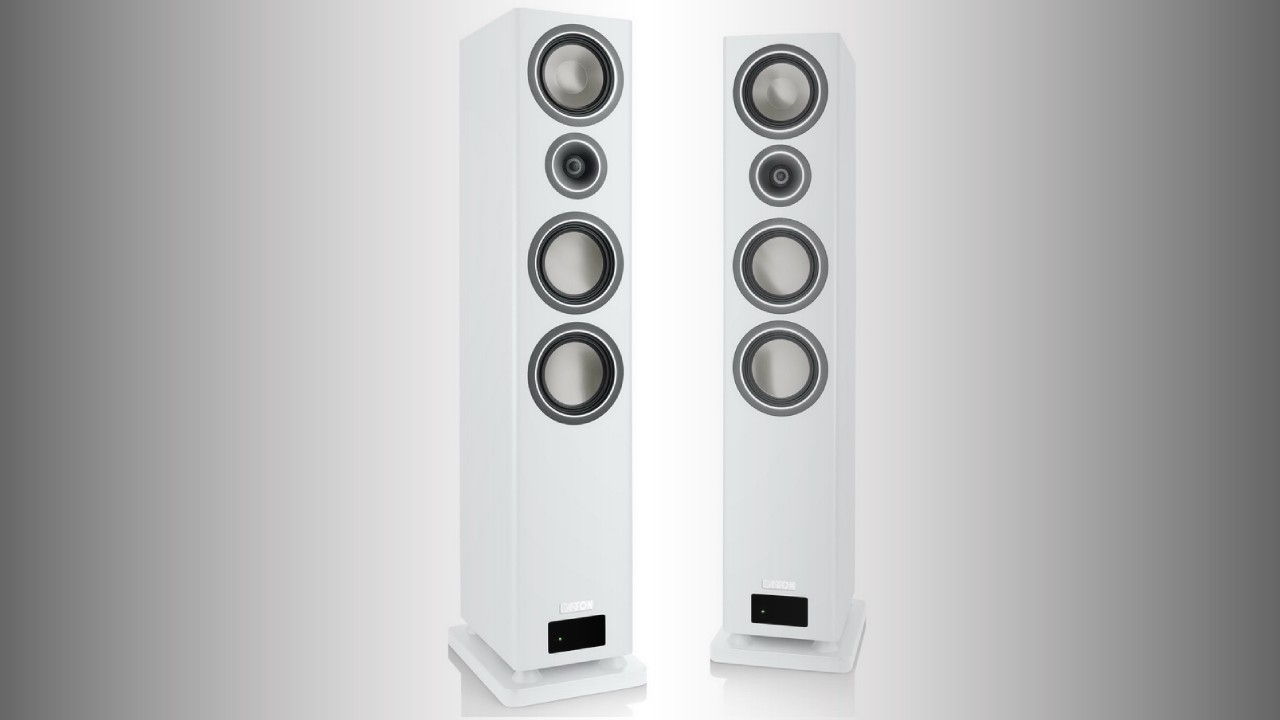
6. Canton Smart Townus 8: Classic speakers that can be used for anhything
The Canton Smart Townus 8 is an active three-way floorstander with analog, USB, optical and coaxial source connections.
The Canton Smart Townus 8 is an active three-way floorstanding speaker rather than an AV receiver.
Its reinforced cabinet houses a 25 mm ceramic-dome tweeter and 174 mm drivers with titanium diaphragms and Wave suspensions.
Balanced XLR, line-level RCA, USB, optical and coaxial inputs allow sources such as televisions, disc players and computers to connect directly, making this another route to a system that does not depend on a conventional receiver.
Best for: Direct-source active floorstanding systems
- Three-way active floorstanding design
- Balanced XLR and line-level RCA inputs
- USB input with an XMOS driver
- Optical and coaxial digital connections
Verdict: A flexible active-speaker alternative for listeners who want to connect several audio and video sources without a separate receiver.

7. Onkyo TX-NR7100: AV receiver that guarantees high quality sound
The Onkyo TX-NR7100 can power a 5.2.4 Dolby Atmos or DTS:X speaker configuration without external amplifiers.
The Onkyo TX-NR7100 offers nine channels of amplification and can run a 5.2.4 immersive speaker layout without external power amplifiers.
It decodes Dolby Atmos and DTS:X, supports Dolby Atmos Height Virtualizer for systems without dedicated height speakers and provides processing for IMAX content.
Dynamic Amplification circuitry, aluminum heat sinks and a custom power transformer support its multichannel design, while THX certification reinforces its home-theater focus. The absence of multichannel preamplifier outputs should be considered by buyers planning external amplification.
Best for: A self-contained 5.2.4 immersive theater
- Nine-channel amplifier configuration
- Supports 5.2.4 without external amplifiers
- Dolby Atmos and DTS:X decoding
- THX certified
Verdict: The strongest receiver option here for a nine-channel system, provided external power-amplifier expansion is not a requirement.
8. KEF
KEF’s company history provides context for its loudspeaker engineering and emphasis on audio innovation.
This is a company profile rather than a receiver or product recommendation.
It traces KEF’s origins, Raymond Cook’s engineering background and the company’s longstanding emphasis on loudspeaker innovation.
That context may help readers understand the brand behind the LS50 Wireless II, but it offers no receiver specifications, connectivity guidance or direct basis for comparing home-cinema electronics.
Best for: Background reading on KEF
- Provides historical brand context
- Explains KEF’s engineering origins
Verdict: Informative brand history, but not a practical AV receiver recommendation or purchasing comparison.
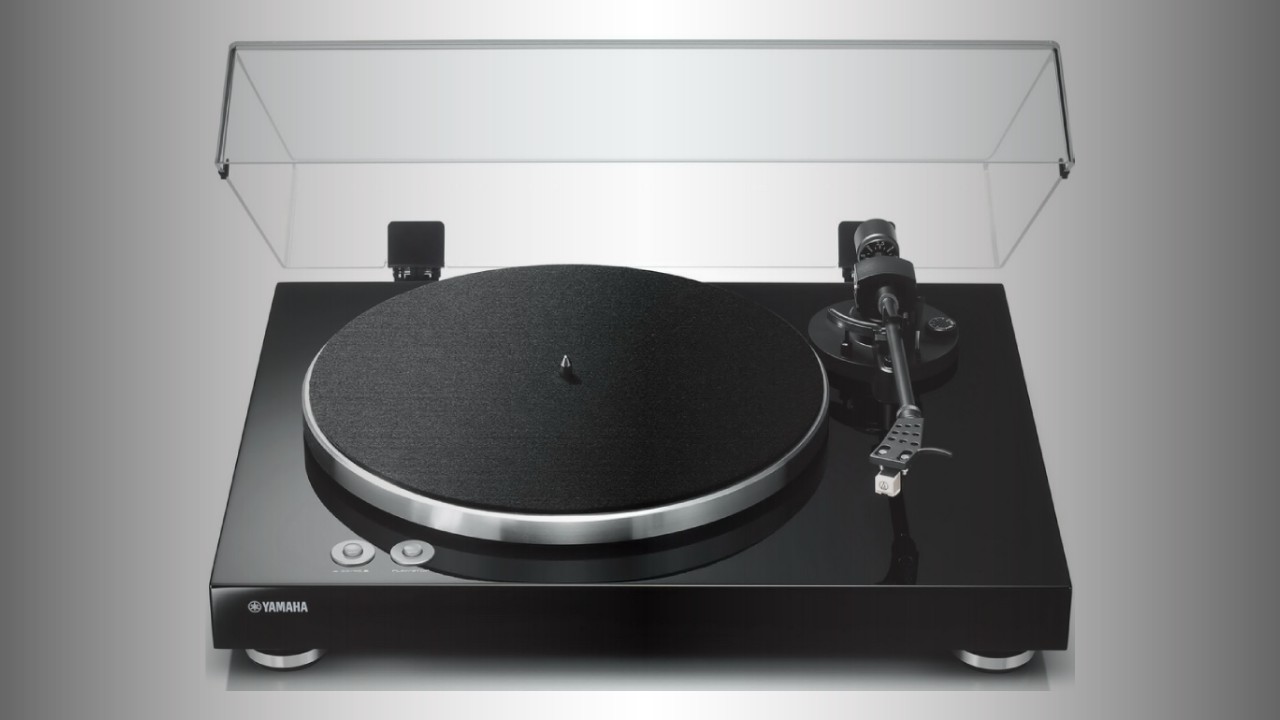
9. Yamaha TT-S303: Keep your vinyl collection alive with this record player
The Yamaha TT-S303 turntable offers switchable line and phono outputs for use with receivers, amplifiers or active speakers.
The Yamaha TT-S303 is a turntable that can serve as an analog source in a receiver-based system.
Its built-in phono equalization allows connection to a standard line input, while switchable phono output enables use with an amplifier or AV receiver that already has a suitable phono stage.
It can also connect directly to an active speaker system, giving vinyl listeners several ways to integrate records into a broader setup.
Best for: Adding vinyl playback to an entertainment system
- Built-in phono equalization
- Switchable line and phono output modes
- Compatible with AV receivers and active speakers
Verdict: A flexible source component for vinyl listeners, especially when the chosen receiver lacks its own phono input.

10. DALI Spektor 2: Affordable yet impressive bookshelf speakers
The DALI Spektor 2 is a compact bookshelf speaker using DALI-designed drivers and wood-fiber-reinforced diaphragms.
The DALI Spektor 2 is a compact loudspeaker rather than an AV receiver, but it represents the type of speaker that could form part of a receiver-driven system.
DALI developed proprietary drivers for the Spektor range and uses wood-fiber-reinforced paper diaphragms intended to reduce unwanted surface resonances.
The wider series includes bookshelf, floorstanding and center-channel models, giving buyers relevant options when assembling a coordinated speaker package.
Best for: Building a compact receiver-powered speaker system
- Proprietary DALI drivers
- Wood-fiber-reinforced paper diaphragms
- Part of a range that includes a center speaker
- Positioned as an affordable bookshelf model
Verdict: A relevant entry-level speaker option for an AV system, though receiver compatibility still needs to be assessed separately.
Frequently asked questions
How many receiver channels do I need?
Match the receiver to the intended speaker layout.
A conventional 5.2 system can use the Denon AVR-580BT, a 5.1.2 height-channel layout suits a seven-channel model such as the Marantz Cinema 60, and a 5.2.4 system requires nine amplified channels such as those in the Onkyo TX-NR7100.
Do I need Dolby Atmos for home cinema?
Not necessarily.
Dolby TrueHD and DTS-HD can support a conventional multichannel system, as demonstrated by the Denon AVR-580BT.
Choose Dolby Atmos or DTS:X when you want height information, dedicated height speakers or virtualization features and have compatible material.
Which HDMI features matter for gaming?
Check the output capabilities of the console or computer and the display.
Support for 4K at 120 Hz is relevant to high-frame-rate video, while VRR, ALLM and QFT are intended to improve gaming responsiveness.
The Marantz Cinema 60 explicitly supports those features, and the Onkyo TX-SR3100 supports 4K120.
Can active wireless speakers replace an AV receiver?
They can replace a receiver in a simpler stereo system when they provide the necessary amplification, streaming and source inputs.
The KEF LS50 Wireless II and Canton Smart Townus 8 support direct source connections, but neither offers the multichannel speaker layouts described for the AV receivers here.
How to choose the right center for your system
Begin with the speaker layout rather than the receiver’s longest feature list.
For a traditional five-channel room, the Denon AVR-580BT covers conventional lossless surround and modern video switching without charging the system with unused height-channel capability.
The Onkyo TX-SR3100 is the more appropriate five-channel choice when Dolby Atmos, DTS:X and 4K120 support are priorities. A seven-channel system opens the door to a practical 5.1.2 layout, and the Marantz Cinema 60 combines that flexibility with extensive gaming-related HDMI features. Buyers planning four height channels should look instead at the nine-channel Onkyo TX-NR7100, which can power a 5.2.4 arrangement internally. Its lack of multichannel preamplifier outputs matters if later expansion with external power amplifiers is part of the plan. Count the required HDMI inputs, confirm the precise video formats used by every source and display, and decide whether ARC or eARC will carry television audio back to the receiver. Room-calibration tools can simplify setup, but they do not remove the need for sensible speaker positioning. Source requirements also matter: a turntable may need phono equalization, while active speakers can eliminate the receiver altogether when stereo playback is sufficient. Finally, reserve part of the system budget for speakers and bass. A receiver’s channel count has little value without an appropriate speaker package, and a dedicated subwoofer can be central to convincing low-frequency reproduction. The most coherent purchase is the one that fits the room, intended layout and connected sources without paying for an expansion path that will never be used.