
Amplifiers for Different Systems: A Practical Buying Guide
A practical guide to integrated amplifiers, stereo and multichannel power amplifiers, monoblocks and preamplifiers, with clear advice on system roles, connectivity and speaker matching.
Choosing an amplifier starts with identifying the job it must perform.
An integrated amplifier combines source selection, volume control and speaker amplification, while a power amplifier needs a separate preamplifier or processor.
A dedicated preamplifier handles source management and volume but does not drive passive speakers by itself. The products here cover those distinct roles, from conventional stereo integrated amplifiers to mono and multichannel power amplifiers. There are also two specialist alternatives: a feature-rich preamplifier for systems built around separate components, and an amplified soundbar intended for listeners who do not want a traditional amplifier-and-speaker arrangement. Power figures matter, but they should be considered alongside speaker impedance, input requirements and system layout. HDMI ARC can simplify television integration, phono inputs support turntables without a separate phono stage, and balanced XLR connections may be important when matching higher-end separates. The right choice is therefore the model that fits the complete system rather than the one with the longest specification list.

1. Audiolab 6000A MkII
The Audiolab 6000A MkII integrated amplifier combines Class AB amplification with upgraded digital conversion and HDMI ARC.
The Audiolab 6000A MkII is a flexible Class AB integrated amplifier rated at 50 watts per channel into 8 ohms and 75 watts into 4 ohms.
Its ESS Sabre ES9038Q2M DAC, HDMI ARC input, Bluetooth 5.1 with aptX HD and extensive analogue and digital connectivity make it suitable for systems mixing television, mobile and conventional hi-fi sources.
It can also operate solely as a preamplifier or power amplifier, leaving room for future system changes.
Best for: Versatile stereo and television systems
- Integrated, preamplifier and power-amplifier modes
- HDMI ARC for television audio
- Bluetooth 5.1 with aptX HD
- Four digital and four analogue RCA connections
Verdict: A broadly equipped integrated amplifier for listeners who value flexible operation and varied source connectivity.
2. McIntosh MC255
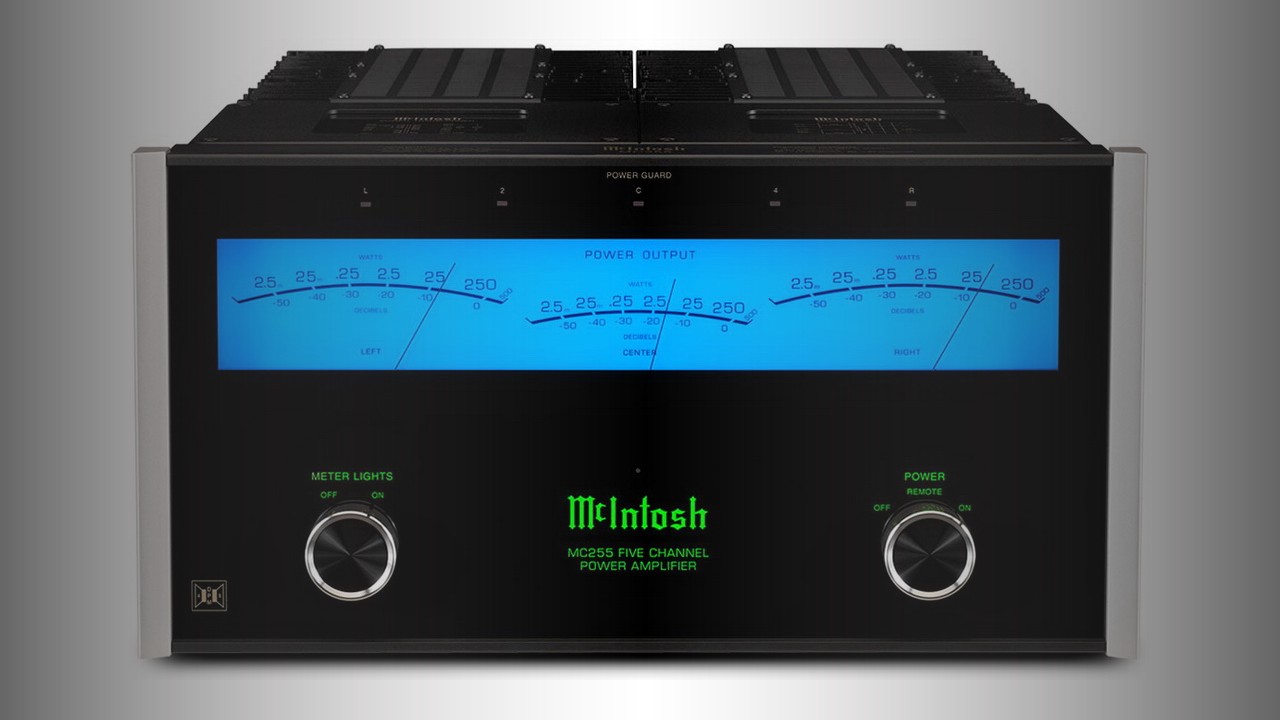
The McIntosh MC255 presents three front-channel power readings within its single wide TripleView meter window.
The McIntosh MC255 is a five-channel power amplifier designed for home-theater systems.
It supplies 200 watts to each channel when all five are operating, or 250 watts per channel when only the front left, center and right channels are used, with the stated output maintained into 4- or 8-ohm speakers through Dynamic Power Manager technology.
Its wide TripleView meter displays real-time output for the three front channels, while dedicated heat sinks and a toroidal isolation transformer address cooling and operational noise.
Best for: High-powered multichannel home theaters
- Five channels of amplification
- 250 watts per channel in three-channel operation
- Constant stated power into 4 or 8 ohms
- TripleView meter for the front channels
Verdict: A purpose-built choice for systems requiring substantial and consistent power across three or five theater channels.

3. Devialet Dione Opéra de Paris
The Devialet Dione Opéra de Paris soundbar is distinguished by its gold-finished upper surface and central spherical ORB module.
The Devialet Dione Opéra de Paris is not a conventional component amplifier but a self-contained soundbar with 950 watts of ADH hybrid amplification.
Its driver arrangement includes eight long-stroke oval bass drivers, a central spherical ORB module and four full-range drivers aimed forward, upward and sideways.
The special edition retains the standard Dione technical design while adding a 22-carat-gold upper finish inspired by the Palais Garnier.
Best for: Statement soundbar installations
- Integrated 950-watt ADH amplification
- Can be positioned horizontally or vertically
- Multiple driver orientations
- Distinctive 22-carat-gold upper finish
Verdict: A visually distinctive alternative for buyers seeking an amplified all-in-one soundbar rather than separate hi-fi components.

4. Matrix Audio Element P2
The Matrix Audio Element P2 is a Class D power amplifier with RCA, balanced XLR and 12-volt trigger connections.
The Matrix Audio Element P2 is a Class D stereo power amplifier rated at 230 watts per channel into 4 ohms.
Two units can be configured for mono operation, with each amplifier then delivering at least 850 watts to one speaker.
Balanced XLR and single-ended RCA inputs broaden preamplifier compatibility, while 12-volt trigger input and output support automated power control within a separates system.
Best for: Expandable high-power separates systems
- 230 watts per channel into 4 ohms
- Mono configuration using two units
- Balanced XLR and RCA inputs
- 12-volt trigger input and output
Verdict: A compact-looking Class D power amplifier with strong output, practical input options and a clear route to mono operation.

5. Marantz PM-KI Ruby
The Marantz PM-KI Ruby pairs a discrete two-stage amplifier design with a dedicated MM/MC phono section.
The Marantz PM-KI Ruby is an integrated amplifier based on a fully discrete two-stage design with separate supplies for its preamplifier and power-amplifier sections.
It delivers 100 watts per channel into 8 ohms and 200 watts into 4 ohms, and includes an MM/MC phono stage using Marantz Musical Premium Phono EQ technology.
A dual-layer chassis, thick aluminum panels, a screened toroidal transformer and copper speaker terminals reflect its emphasis on substantial construction.
Best for: Turntable-focused premium stereo systems
- 100 watts per channel into 8 ohms
- MM and MC phono support
- Separate preamplifier and power-amplifier supplies
- Vibration-resistant dual-layer chassis
Verdict: A powerful integrated design for listeners who want substantial construction and built-in support for MM or MC cartridges.

6. Mark Levinson No. 526
The Mark Levinson No. 526 preamplifier provides analogue, phono and digital input options in a dual-mono design.
The Mark Levinson No.
526 is a dual-mono preamplifier combining analogue source control, digital conversion and a built-in phono stage.
Five line-level analogue inputs, including two balanced connections, are joined by six digital inputs covering asynchronous USB, AES/EBU, coaxial and optical sources. Its ESS Sabre32 Reference DAC supports PCM up to 24-bit/192kHz and DSD64 or DSD128, while a front headphone output adds private-listening convenience.
Best for: Source-rich systems built around separate power amplifiers
- Dual-mono balanced circuit
- Built-in phono stage and DAC
- Five analogue and six digital inputs
- Front-panel headphone output
Verdict: A comprehensively equipped preamplifier for systems that need analogue, phono and high-resolution digital source management in one component.
7. Quad Artera Pre
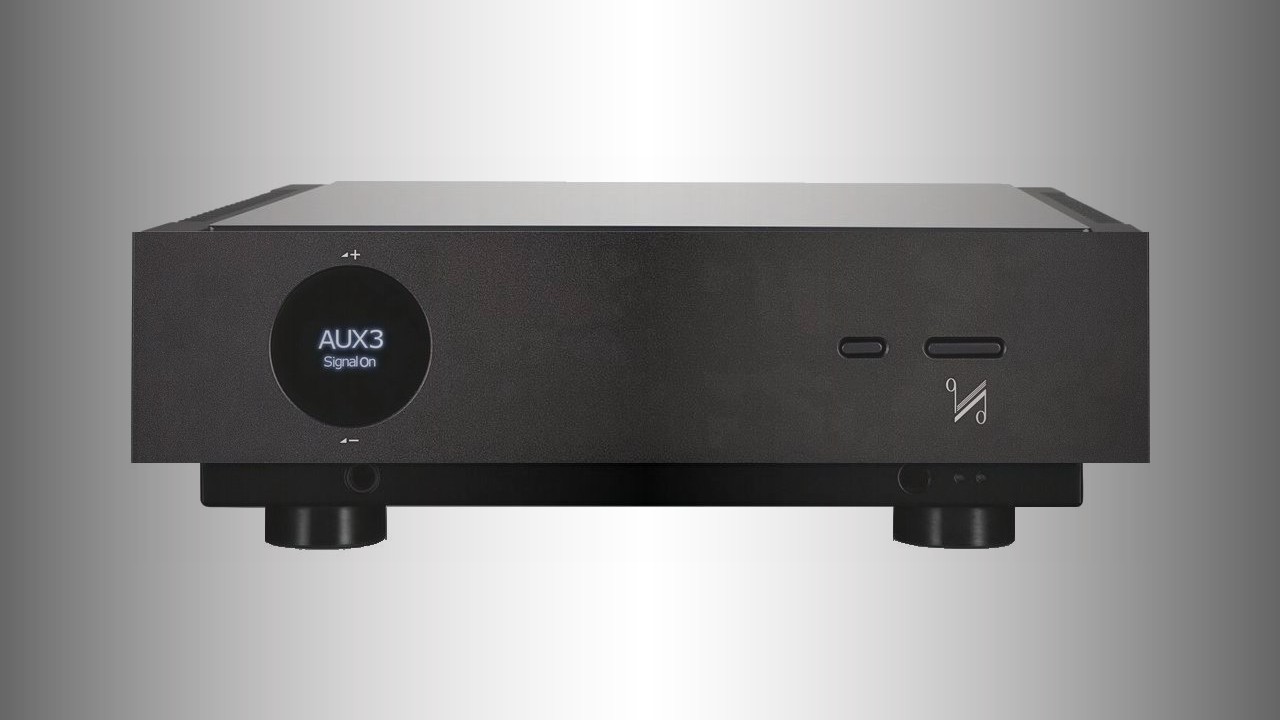
The Quad Artera Pre offers its distinctive Tilt adjustment alongside line-level, balanced and MM/MC phono inputs.
The Quad Artera Pre is a dedicated preamplifier distinguished by its Tilt control, which adjusts upper and lower frequencies together in 1dB steps around a point near 700Hz.
It also offers three low-frequency settings, and adjustments can be assigned independently to individual inputs to compensate for differences between sources.
Connections include three line-level RCA inputs, a switchable MM/MC Class A phono input and one balanced XLR input, with a direct mode available for minimal signal-path intervention.
Best for: Systems needing subtle source-by-source tonal correction
- Tilt control with 1dB steps
- Input-specific tonal adjustments
- Switchable MM/MC phono input
- Balanced XLR input
Verdict: An unusually adaptable preamplifier for listeners who want practical tone shaping without giving up a direct signal mode.

8. Pioneer A-70DA
The Pioneer A-70DA features a thick aluminum front panel, solid-metal controls and dedicated tone adjustment.
The Pioneer A-70DA is an integrated stereo amplifier with a traditional control layout and notably substantial exterior construction.
Its case uses 1.8mm aluminum side plates, a 3.5mm milled aluminum front panel and solid-metal control knobs.
Bass and treble controls can be bypassed, while tone compensation and an attenuator provide additional control over tonal balance and the usable volume range.
Best for: Listeners who prefer tactile controls and adjustable tone settings
- Milled aluminum front panel
- Solid-metal control knobs
- Bypassable bass and treble controls
- Attenuator for limiting the volume range
Verdict: A traditionally styled integrated amplifier whose physical controls and volume-limiting feature prioritize everyday usability.
9. Topping B100 Monoblock Power Amplifier
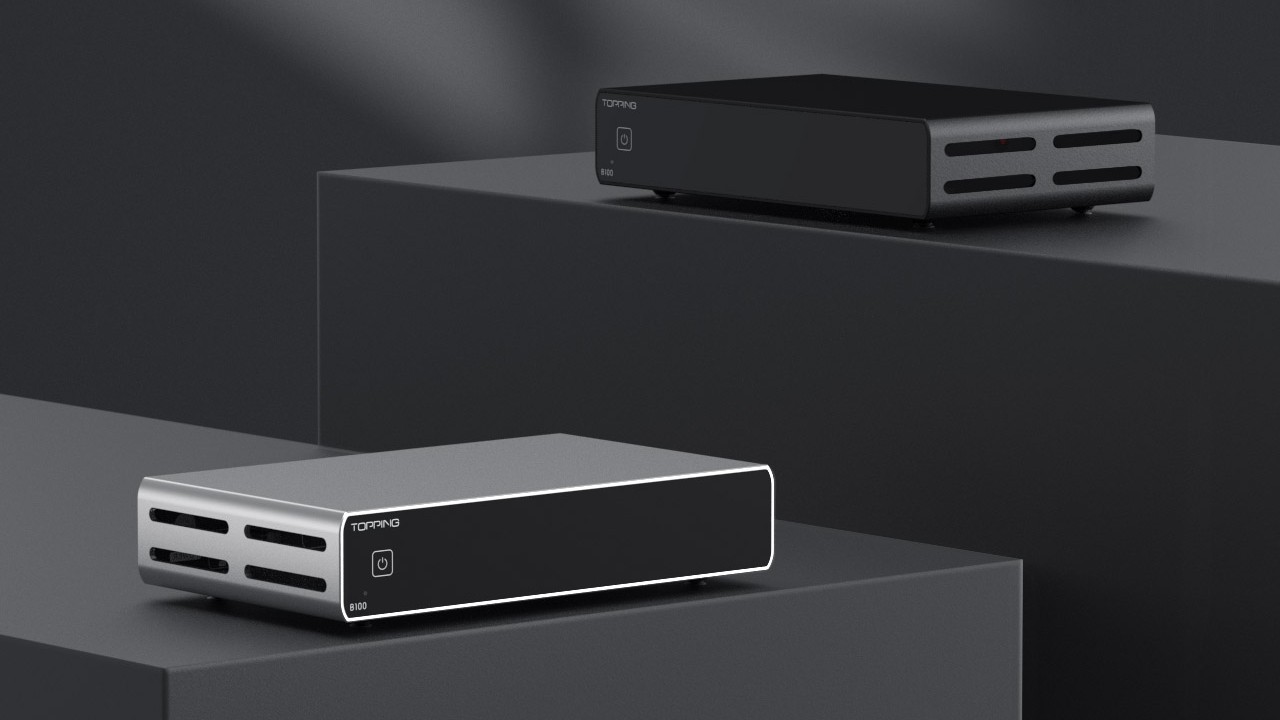
The compact Topping B100 monoblock provides balanced and RCA inputs, selectable gain and a 12-volt trigger.
The Topping B100 is a mono power amplifier, so a stereo system requires one unit for each speaker.
It is rated at 100 watts into 4 ohms and 50 watts into 8 ohms, and provides both an RCA input and a balanced combination XLR and 6.35mm TRS input.
Rear-panel three-stage gain adjustment helps with system matching, while a 12-volt trigger supports coordinated power control.
Best for: Compact dual-mono stereo systems
- 100 watts into 4 ohms
- Balanced combo and RCA inputs
- Three-stage gain control
- 12-volt trigger connection
Verdict: A focused monoblock option for buyers prepared to use two amplifiers and who need adjustable gain and balanced connectivity.
10. Marantz MM7025
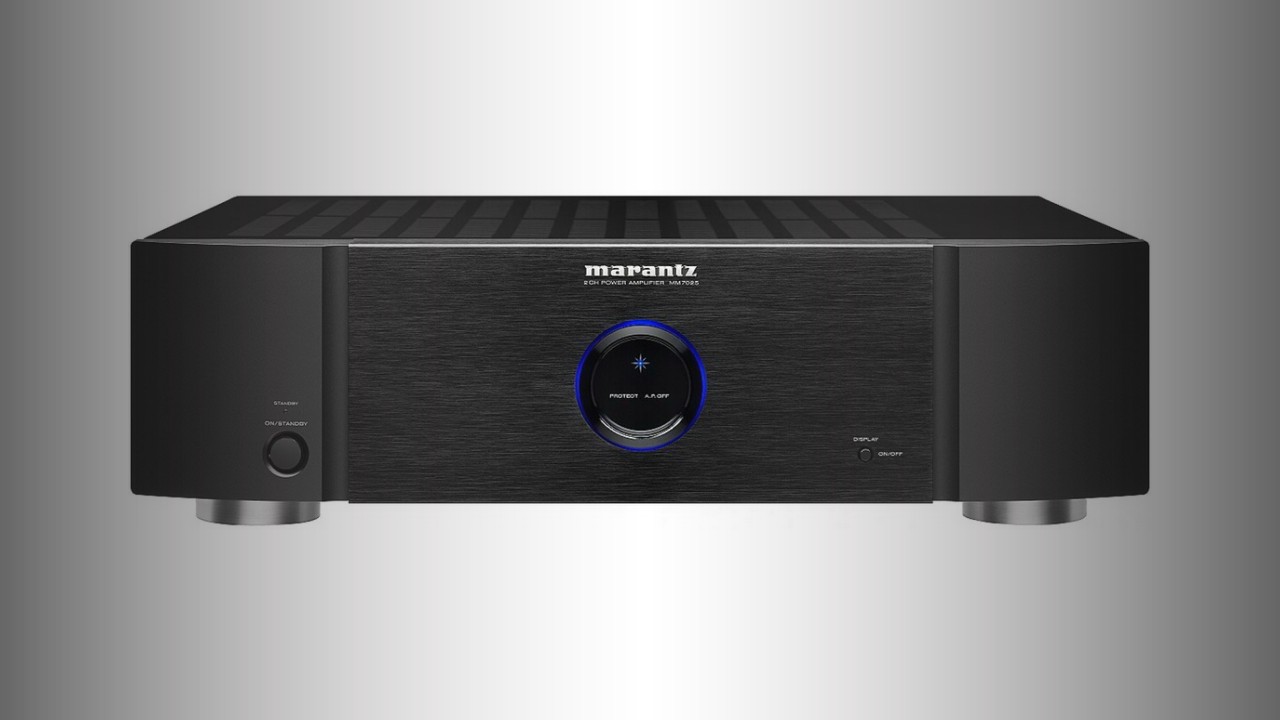
The Marantz MM7025 is a two-channel power amplifier with a temperature-managed internal cooling system.
The Marantz MM7025 is a two-channel power amplifier intended for either stereo use or expansion of a home-theater system.
It delivers 140 watts per channel into 8 ohms and 170 watts per channel into 6 ohms, supported by a large W-shaped transformer, two 15,000µF capacitors and a linear power supply.
A temperature-controlled fan assists the output-transistor cooling system, and the metal chassis incorporates anti-vibration measures.
Best for: Adding two powered channels to a hi-fi or theater system
- 140 watts per channel into 8 ohms
- Suitable for stereo or home-theater expansion
- Temperature-controlled cooling fan
- Anti-vibration metal chassis
Verdict: A practical two-channel power amplifier for increasing system power or driving an additional pair of home-theater channels.
Frequently asked questions
Should I choose an integrated amplifier, preamplifier or power amplifier?
Choose an integrated amplifier if you want source selection, volume control and speaker amplification in one unit.
A preamplifier requires a separate power amplifier, while a power amplifier needs a preamplifier, processor or another source with suitable volume control.
How should amplifier power be matched to speakers?
Check both the speaker impedance and the amplifier's stated output at that impedance.
Power figures measured into different loads are not directly interchangeable, and adequate output should be balanced with the room, listening level and speaker requirements.
Which connections should I prioritize?
Start with the sources already in the system.
HDMI ARC is useful for television audio, an MM or MC phono input can remove the need for an external phono stage, and XLR inputs are relevant when the partnering preamplifier or source provides balanced outputs.
When does a mono amplifier make sense?
A monoblock powers one speaker channel, so two are required for stereo.
This arrangement suits buyers who specifically want a dual-mono layout, but it requires more components, power connections and space than a conventional two-channel amplifier.
How to choose the right amplifier for your system
Begin by deciding whether you need a complete integrated amplifier or only one stage of a separates system.
The Audiolab 6000A MkII and Pioneer A-70DA package control and amplification together, while the Matrix Audio Element P2, Topping B100, Marantz MM7025 and McIntosh MC255 depend on external source selection and volume control.
The Mark Levinson No. 526 and Quad Artera Pre perform the opposite role: they manage sources but require separate power amplification. Next, map every source and speaker channel before comparing headline power figures. Television users may value the Audiolab's HDMI ARC input, turntable owners should distinguish between MM and MC cartridge support, and multichannel installations need the correct number of amplifier channels. The McIntosh is designed around three- or five-channel theater operation, whereas the two-channel Marantz MM7025 can serve stereo systems or add a pair of channels elsewhere. Consider system growth as well. The Audiolab can be separated into preamplifier and power-amplifier roles, the Matrix can be expanded into a two-unit mono configuration, and the Topping is designed as a monoblock from the outset. Trigger connections can make a multi-box system easier to operate, but they do not replace careful checks of input type, gain compatibility, speaker impedance, ventilation and available rack space. Finally, avoid treating all products in this selection as direct substitutes. The Devialet is a self-contained soundbar, the two preamplifiers cannot drive passive speakers, and the power amplifiers require upstream control. Once those functional differences are resolved, connectivity, channel count and appropriate output provide a more reliable basis for choosing than appearance or a single specification.