


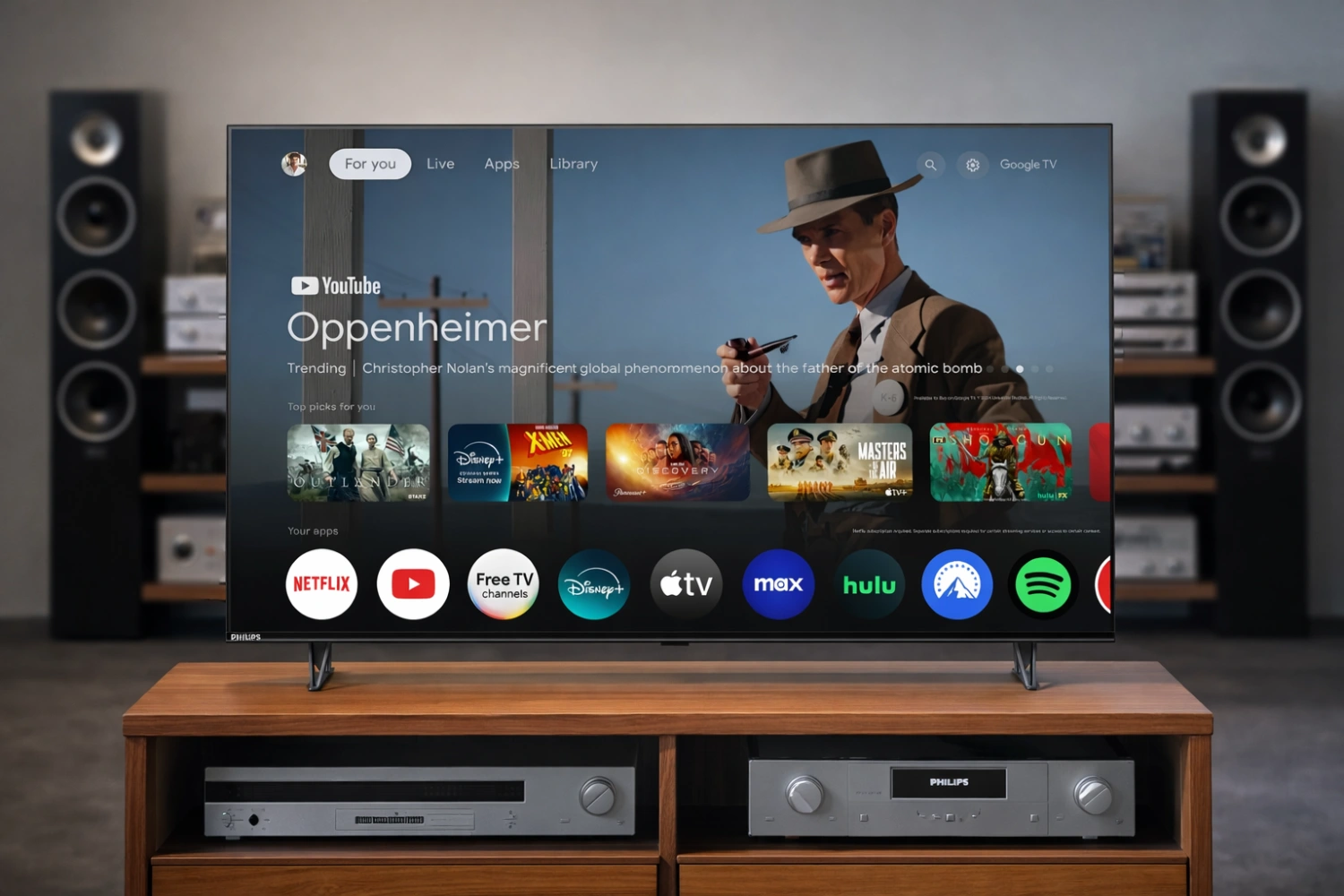
Philips is preparing for a major transformation in its smart TV ecosystem. According to TPVision—the company behind Philips TVs—all upcoming models will run on the new Titan OS platform by 2026. What started as a gradual rollout on entry-level models is now evolving into a full-scale transition, covering everything from affordable TVs to high-end OLED displays.
This shift signals more than just a software update. It represents a clear move away from reliance on third-party platforms like Android TV and Google TV, placing Philips alongside manufacturers such as Samsung and LG, which have long prioritized their own ecosystems with Tizen and webOS.
A European Platform with a Different Approach
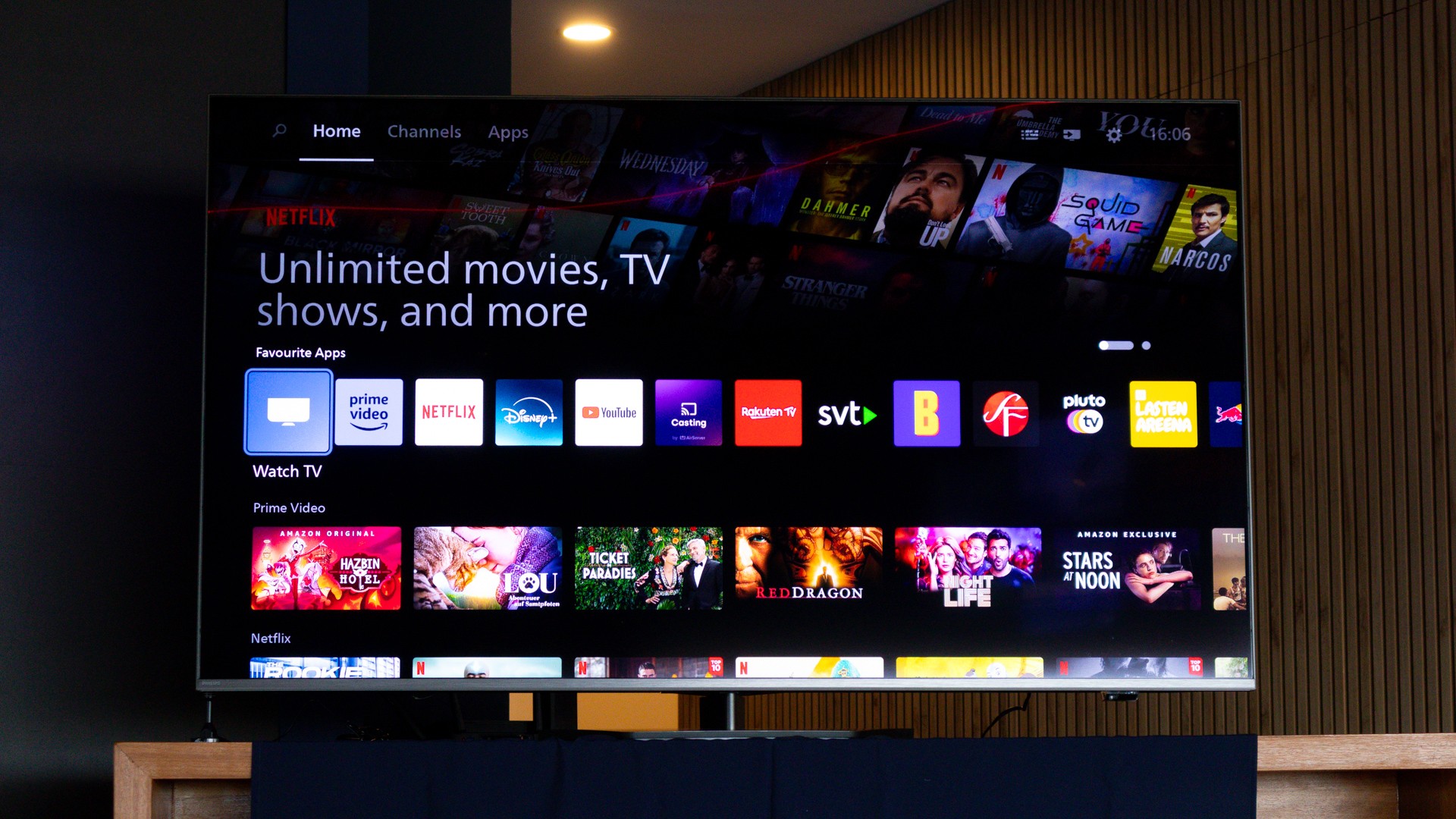
Titan OS is a European-developed, Linux-based operating system designed with a web-first philosophy. Instead of relying heavily on downloadable apps, the platform emphasizes instant access to content through cloud-based services. In practice, this means users can jump straight into streaming without filling up internal storage with apps—an approach that could result in faster, more responsive performance over time.

Another key selling point is longevity. Titan OS-powered TVs are expected to receive security updates for up to 10 years, a significant commitment in a category where software support is often limited. For consumers, this could translate into longer product lifespans and better long-term value.
Streaming, Connectivity, and Ecosystem Support
Despite being a relatively new platform, Titan OS already supports most of the major streaming services. Netflix, YouTube, Disney+, HBO Max, and Prime Video are all available at launch, ensuring that users won’t miss out on essential content. Apple TV is expected to join in spring 2026, followed by Spotify and SkyShowtime later on.
The platform also integrates with popular smart home and control systems, including Apple AirPlay 2, Google Assistant, Amazon Alexa, and Control4. However, some gaps remain—most notably the absence of Google Cast support, and there is still no official word on future compatibility with Google’s newer Gemini ecosystem.
Why Manufacturers Are Embracing Titan OS
For TV manufacturers, Titan OS offers something that platforms like Android TV cannot: control. By adopting an open, customizable system, brands can shape the user experience, interface design, and feature set to better align with their own identity.
This flexibility also opens the door to new revenue streams, whether through content partnerships, services, or platform-level integrations. However, this aspect has raised some concerns within the industry. Analysts warn that increased control could also lead to more aggressive advertising strategies or deeper user tracking—something consumers are becoming increasingly sensitive to.
A Growing Trend in the TV Industry
Philips is not alone in rethinking its software strategy. The broader TV market has been moving steadily toward proprietary platforms for years. Samsung’s Tizen and LG’s webOS have already demonstrated the benefits of owning the full user experience, from interface design to monetization.
With Titan OS, Philips—and now JVC, which has also committed to the platform—is taking a similar path, but with a distinctly European foundation.
A Defining Moment for Philips TVs
The full transition to Titan OS marks a defining moment for Philips TVs. It’s a shift driven by performance, long-term support, and strategic independence—but also one that will ultimately be judged by user experience.
If Titan OS can deliver on its promises of speed, simplicity, and stability—without compromising usability or overwhelming users with ads—it could become a serious contender in the smart TV space. For now, all eyes are on 2026, when Philips completes its transition and fully embraces its new software future.