
Topping D90 III Discrete: Digital Flexibility in a Compact DAC
With separate PSRM conversion modules for each channel, extensive wired and wireless inputs, balanced outputs, configurable I2S, and software-based parametric EQ, the Topping D90 III Discrete is designed to serve as a flexible digital hub for a wide range of hi-fi systems.

The Topping D90 III Discrete is more than a variation on an established DAC design. Its defining change is a fully discrete digital-to-analog conversion stage built around one PSRM module per channel, while its broader feature set addresses several practical system-building priorities. It accepts digital sources over USB, AES/EBU, coaxial, optical, I2S, and Bluetooth; provides both balanced and single-ended analog outputs; and includes 12V trigger connections for coordinated power control. A configurable 10-band parametric equalizer adds another layer of flexibility. Together, these features make the D90 III Discrete relevant not only as a converter for a computer-based system, but also as a central interface for multiple digital sources.
A discrete approach to digital conversion
At the center of the D90 III Discrete is Topping’s fully discrete conversion module. Each stereo channel receives its own PSRM module for digital-to-analog conversion, distinguishing this model from the standard D90 III architecture. The design also retains an Altera MAX CPLD, a programmable logic component used within the unit’s digital processing platform.
The converter supports PCM data at resolutions up to 32-bit/768kHz and native DSD up to DSD512. Those limits extend well beyond the resolution of most commercially distributed music, but they can still matter in specialist computer-audio systems, particularly when playback software performs upsampling or when an owner maintains a library in several high-resolution formats. Broad format support reduces the likelihood that the DAC will become the limiting component in such a setup.
The published line-output figures also indicate the intended emphasis on low-noise conversion. Over USB at 96kHz, the specified A-weighted THD+N is 0.00007% for RCA and 0.00006% for XLR. The corresponding stated dynamic-range figures are 126dB and 130dB, while A-weighted signal-to-noise ratio is listed as 127dB for RCA and 131dB for XLR. These specifications are particularly relevant when matching the DAC with revealing downstream electronics, although they should be understood as documented measurements rather than listening impressions.
A complete set of digital inputs
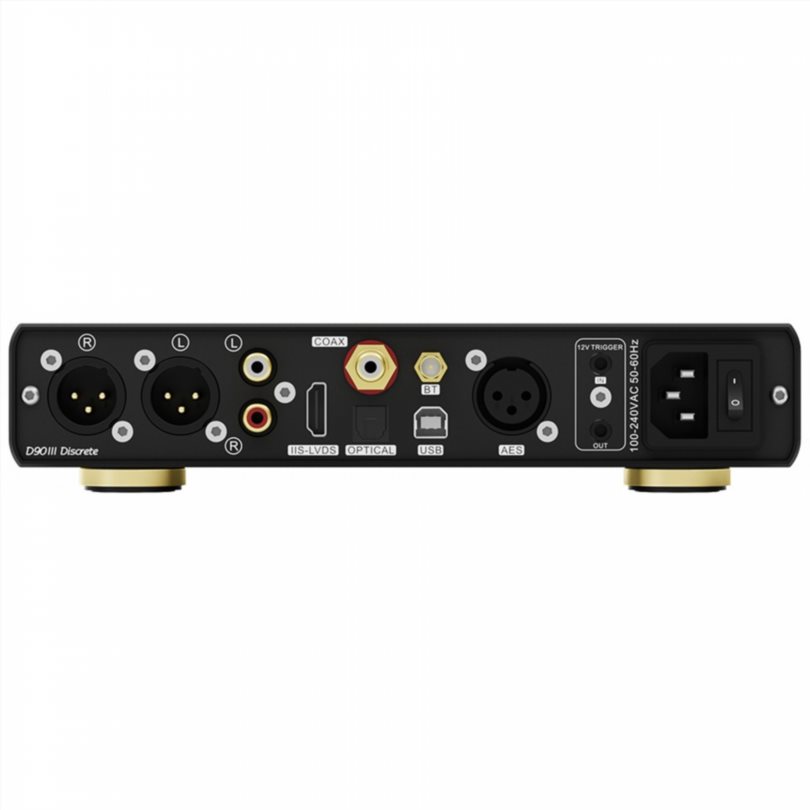
The D90 III Discrete can accommodate a varied collection of digital sources. Its rear-panel inputs comprise USB-B, AES/EBU, coaxial S/PDIF, optical Toslink, and I2S over an HDMI-format connector. An XMOS XU-316 interface handles USB input, making that connection the natural choice for a desktop computer, music server, or dedicated USB transport.
AES/EBU provides a balanced professional-style digital connection, while coaxial and optical inputs allow conventional transports, televisions, streamers, and other S/PDIF-equipped devices to be integrated without repeatedly changing cables. The inclusion of all three formats is useful for owners building a system around more than one digital source.
I2S connections can present compatibility complications because devices do not always use the same signal arrangement, even when they share an HDMI-style socket. Topping addresses this with support for multiple I2S protocols, including I2S Phase Standard, I2S Phase Reverse, I2S DSDR Data, I2S DSDR LRCLK, DSD Flag 14, and DSD Flag 15. This configurability may improve the chances of matching the DAC with different compatible digital transports, though users should still confirm the required pin and signal arrangement for their specific source.
Bluetooth without treating wireless as an afterthought
Wireless playback is handled by Qualcomm’s QCC5125 Bluetooth 5.1 receiver. The D90 III Discrete supports SBC, aptX, aptX HD, aptX Adaptive, and LDAC, giving compatible phones, tablets, and computers several alternatives to the basic Bluetooth codec.
With a suitable source and codec, the Bluetooth implementation can accept audio at up to 24-bit/96kHz. That does not make wireless transmission identical to a direct wired connection, and actual operation depends on the sending device and selected codec. Nevertheless, the support for aptX HD, aptX Adaptive, and LDAC makes Bluetooth more useful than a convenience input limited to the most basic format.
This can be particularly practical for shared systems. A primary listener might use USB, AES/EBU, or I2S for a dedicated source, while other household members can connect wirelessly without interacting with the main playback hardware. Bluetooth also gives visitors a simple way to play music through the system.
Parametric EQ for system-specific adjustment
One of the D90 III Discrete’s more distinctive facilities is its 10-band parametric equalizer. Through the Topping Tune application for Windows, users can adjust frequency, gain, and bandwidth rather than relying on fixed bass and treble controls. This makes it possible to perform narrowly targeted changes or construct a broader tonal adjustment.
The software can import original and target response curves and create compensation curves based on the selected target. Multiple profiles can also be saved and recalled. That profile system could be valuable when accommodating different loudspeaker placements, program material, or listening preferences without rebuilding an EQ curve each time.
Parametric equalization is not essential for every owner, and applying it effectively requires care. Its inclusion is nevertheless significant because it gives the DAC a degree of system-adjustment capability that would otherwise require playback software or an additional processor. Users who prefer an unaltered signal path can simply avoid applying corrective profiles.
Balanced and single-ended system integration
Analog output is available through stereo RCA and balanced stereo XLR connections. This allows the DAC to work with conventional integrated amplifiers as well as balanced preamplifiers, active loudspeakers, and other equipment fitted with XLR inputs. The specified output impedance is 50 ohms over RCA and 150 ohms over XLR.
The documented output levels are 2.1Vrms or 2.6Vrms from RCA and 4.2Vrms or 5.2Vrms from XLR, depending on the selected 4V or 5V mode. The availability of different output settings can help with gain matching, especially when partnering the DAC with amplifiers or active speakers that have different input sensitivities.
A 12V trigger input and output further support installation in a coordinated system. Trigger control allows compatible components to switch operating states together, reducing the need to power each unit separately. This is a small feature, but it becomes increasingly useful when a DAC is part of a multi-component rack or is placed somewhere that is not easily reached.
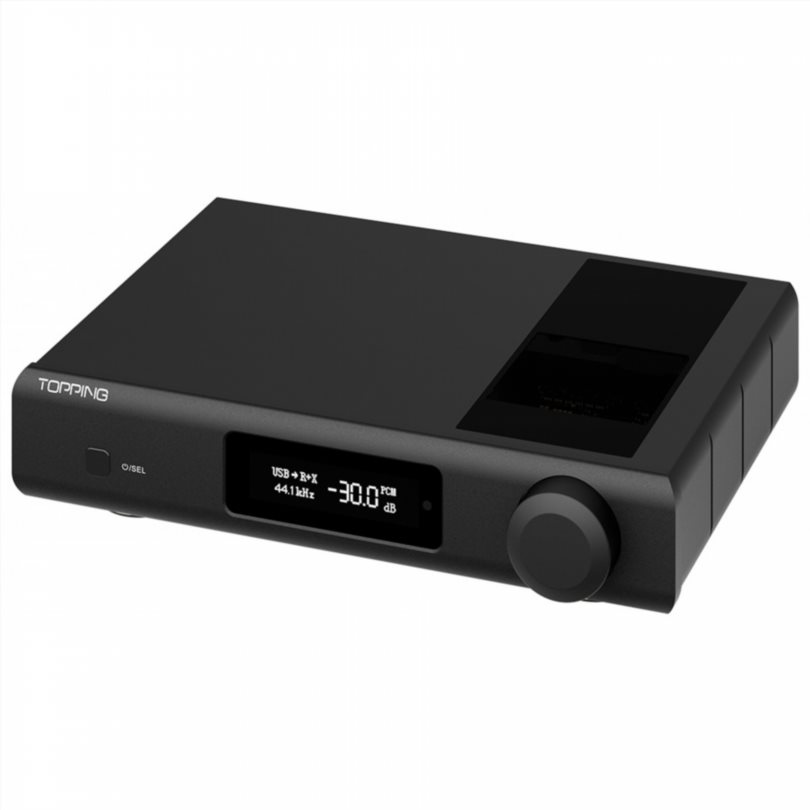
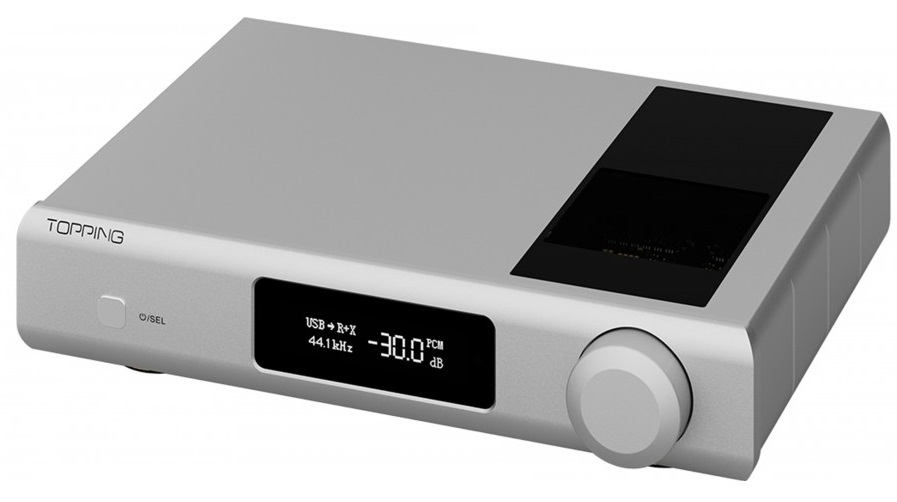
At 220 x 160 x 45mm, the D90 III Discrete has a compact footprint relative to full-width hi-fi components. It is offered in black or silver, providing straightforward visual matching with common equipment finishes.
Who the D90 III Discrete is best suited to
The D90 III Discrete is most suitable for listeners who need one DAC to manage several kinds of digital source. Its combination of computer-friendly USB, traditional S/PDIF inputs, AES/EBU, configurable I2S, and high-resolution Bluetooth makes particular sense in systems that mix modern streaming hardware with established disc transports or televisions.
It should also appeal to owners who want balanced XLR connectivity, selectable output levels, and 12V trigger integration. The parametric EQ offers additional value for users prepared to configure their system through a Windows application and work with frequency, gain, and bandwidth controls.
The product is less directly aimed at someone seeking a single-box headphone system, because the documented connections describe line outputs rather than an integrated headphone output. Likewise, listeners needing analog source switching would require a separate preamplifier or integrated amplifier. Its role is focused: it is a versatile digital-to-analog converter and digital-source hub rather than an all-purpose analog control center.
Conclusion
The Topping D90 III Discrete combines a dual-channel discrete PSRM conversion architecture with unusually broad digital connectivity. USB through the XMOS XU-316 interface, AES/EBU, coaxial, optical, configurable I2S, and Bluetooth 5.1 cover both dedicated and casual sources, while RCA and balanced XLR outputs make it adaptable to different downstream systems. Its 10-band parametric EQ, selectable output levels, saved adjustment profiles, and 12V trigger input and output add practical control beyond basic conversion. It is therefore best suited to listeners assembling a flexible, digitally focused system—especially those who value balanced connectivity, multiple source options, wireless convenience, and the ability to tailor frequency response through software.