


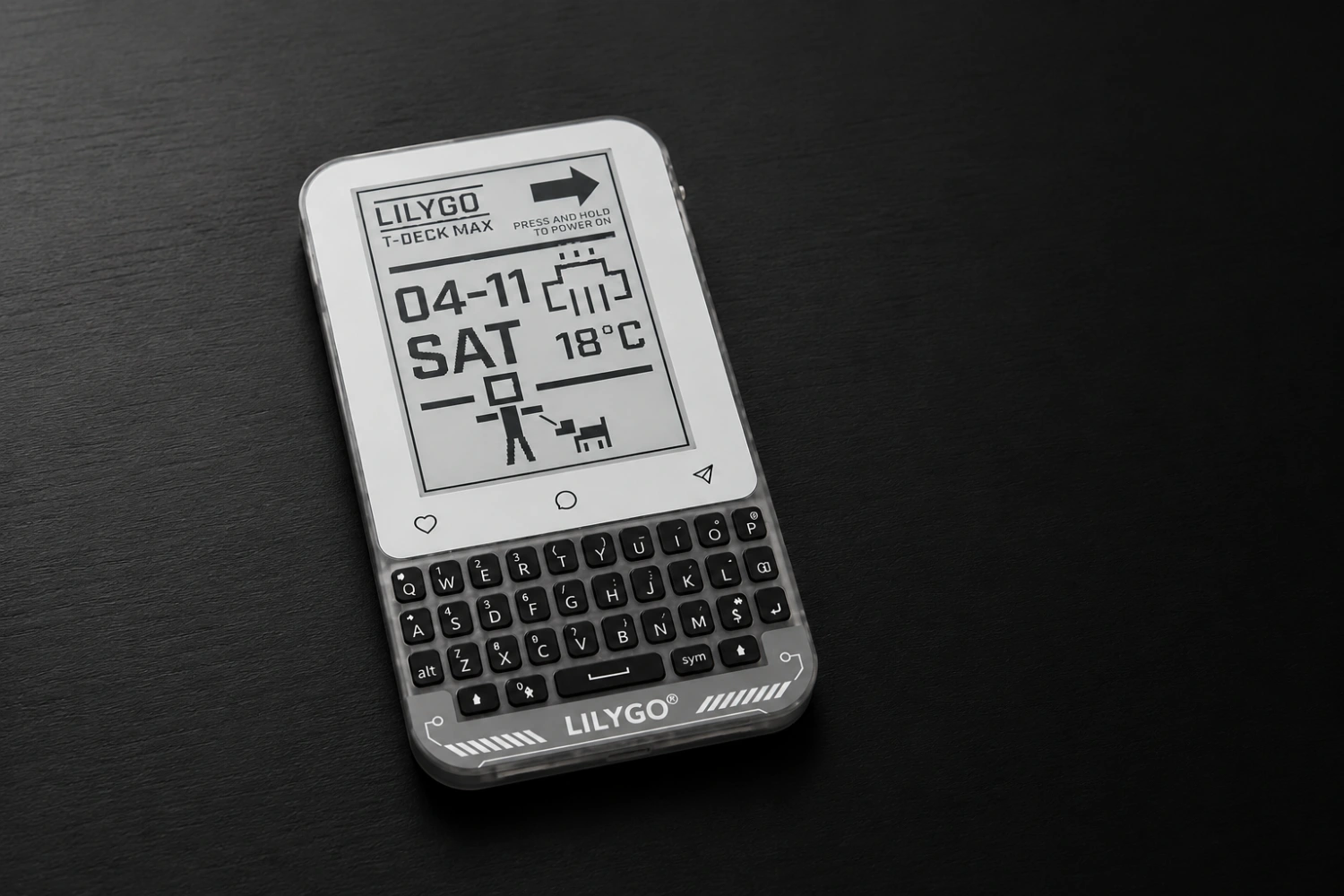
Chinese hardware company LILYGO has introduced one of the strangest mobile devices of the year, the new T-Deck Max. At first glance it looks like a retro smartphone from an alternate timeline, but under the hood it is something far more experimental, blending hacker culture, off-grid communication, and old-school mobile design into a pocket-sized gadget built for tech enthusiasts rather than mainstream users.
A smartphone alternative built for hackers and explorers
The T-Deck Max is not designed to compete with modern Android phones from companies like Samsung or Apple. In fact, it skips Android entirely. Instead, the device runs on an ESP32-S3 platform, making it closer to a programmable communications terminal than a traditional smartphone.

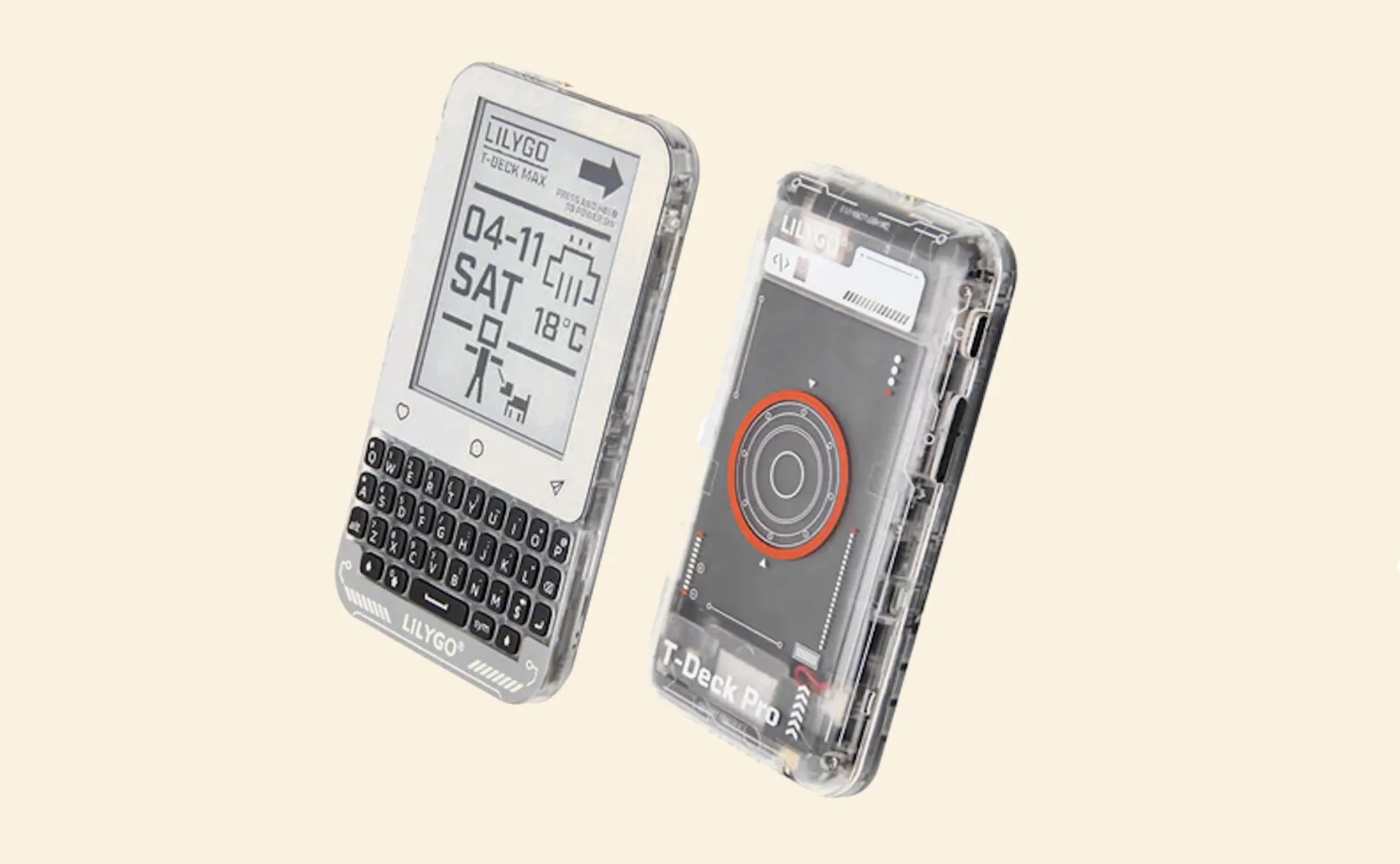
That also means users should not expect a polished out-of-the-box experience. The T-Deck Max is aimed squarely at makers, developers, radio hobbyists, and anyone who enjoys building and modifying their own hardware projects.
What makes the device especially interesting is its ability to communicate even when conventional mobile networks are unavailable.
Offline communication with LoRa and GPS
One of the headline features is built-in LoRa support, allowing the T-Deck Max to transmit small amounts of data across long distances without relying on Wi-Fi or cellular infrastructure. With LoRa repeaters, the communication range can be extended even further, opening up possibilities for off-grid messaging, emergency communication, hiking expeditions, or remote field work.
The integrated GPS module also allows users to send location data, turning the device into a compact navigation and tracking tool. For situations where traditional connectivity is still needed, the T-Deck Max also supports 4G communication.

Retro design meets modern experimentation
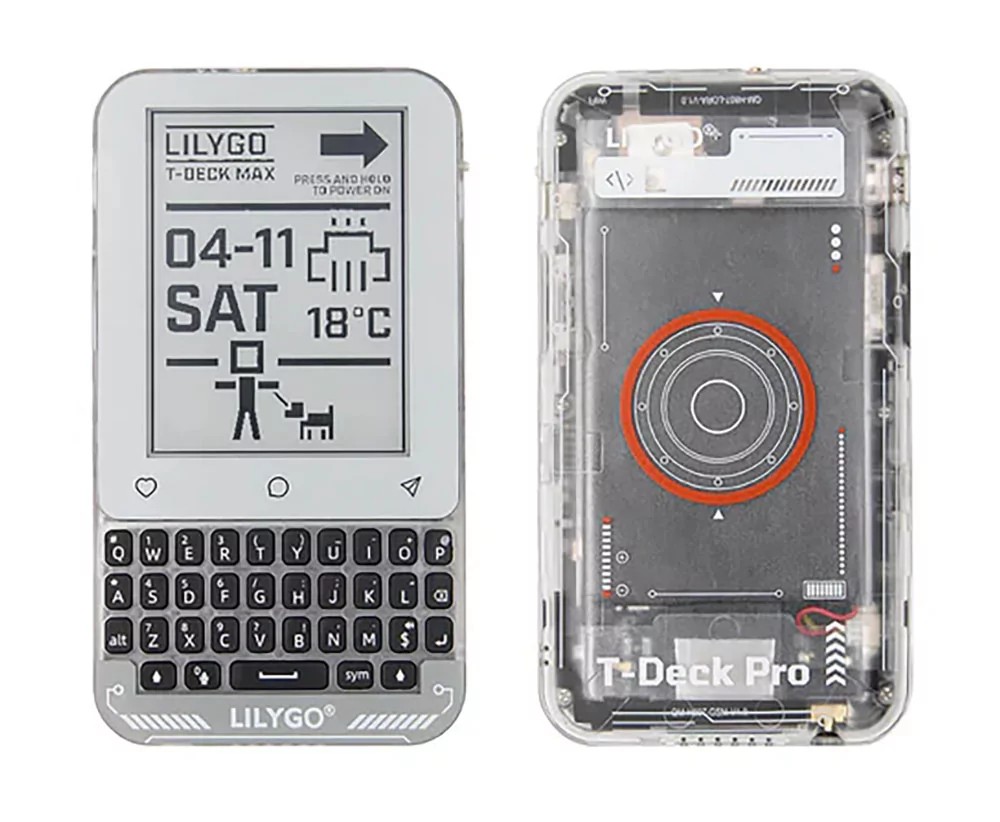
The hardware itself looks refreshingly different from today’s glossy touchscreen slabs. The T-Deck Max combines a compact 3.1-inch E Ink display with a physical keyboard, giving it a distinctly cyberpunk-inspired appearance. The monochrome E Ink panel has a resolution of 320 x 240 pixels and prioritizes battery-friendly readability over multimedia performance.
Additional hardware features include:
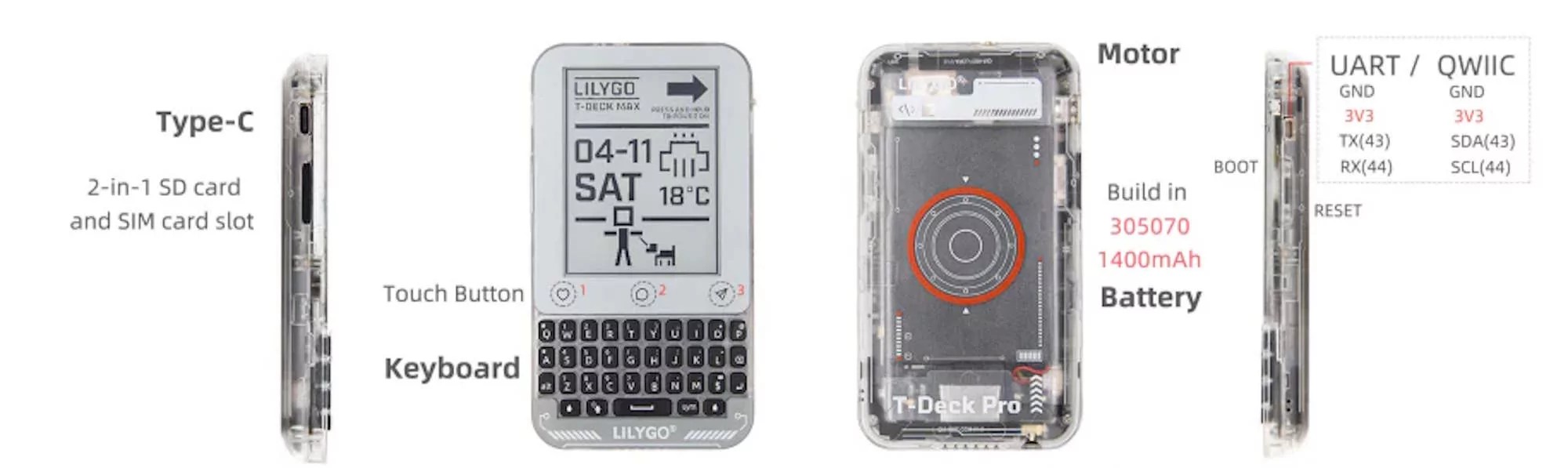
- MicroSD card support
- Built-in microphone and speaker
- Support for external sensors and actuators
- Programmable functionality through Arduino and PlatformIO IDE
Because the device is highly customizable, users can essentially turn it into anything from a portable messenger to a DIY IoT controller or remote monitoring system.

Not for everyone, and that is the point
The T-Deck Max is clearly not trying to become the next mass-market smartphone. Instead, it feels like a niche gadget designed for people who miss the days when mobile devices were weird, customizable, and experimental.
At around $110 USD, the T-Deck Max offers an unusually affordable entry point into the world of portable open-source communication hardware. Whether it becomes a cult favorite among makers and tinkerers remains to be seen, but it is certainly one of the more unconventional mobile devices launched this year.